

Doom: The Dark Ages aduce acțiunea Slayer-ului direct pe un câmp de luptă medieval, intens și brutal, iar pe PS5 rulează foarte bine. Nu este doar o continuare a lui Eternal — lupta e mai provocatoare, axată pe apărare și pe menținerea pozițiilor. Cu 60 fps stabil, grafică de calitate și feedback precis pe DualSense, Doom: The Dark Ages oferă o experiență solidă. Această recenzie va continua în limba engleză.
Campaign, pacing & systems (spoiler-light)
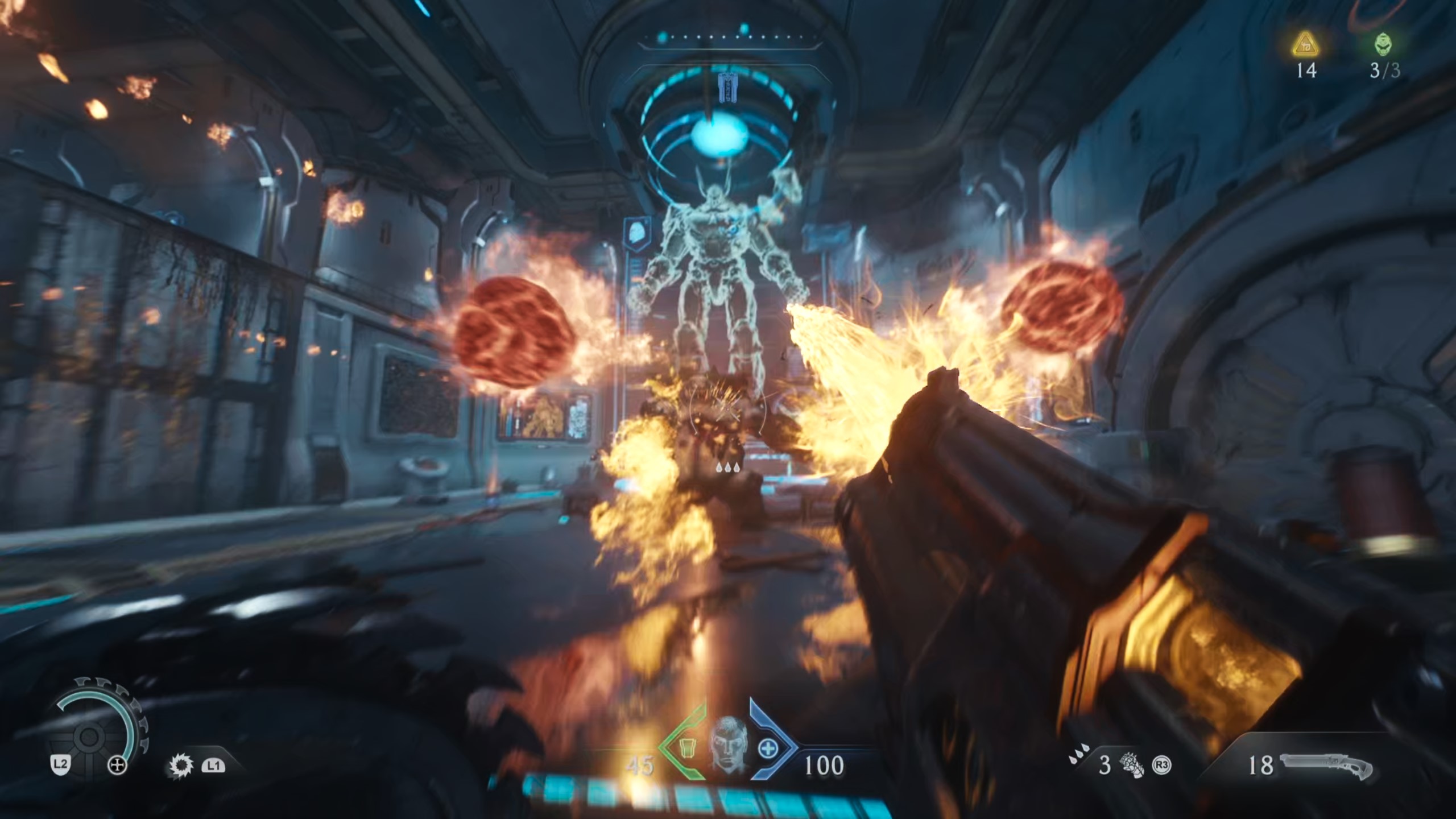
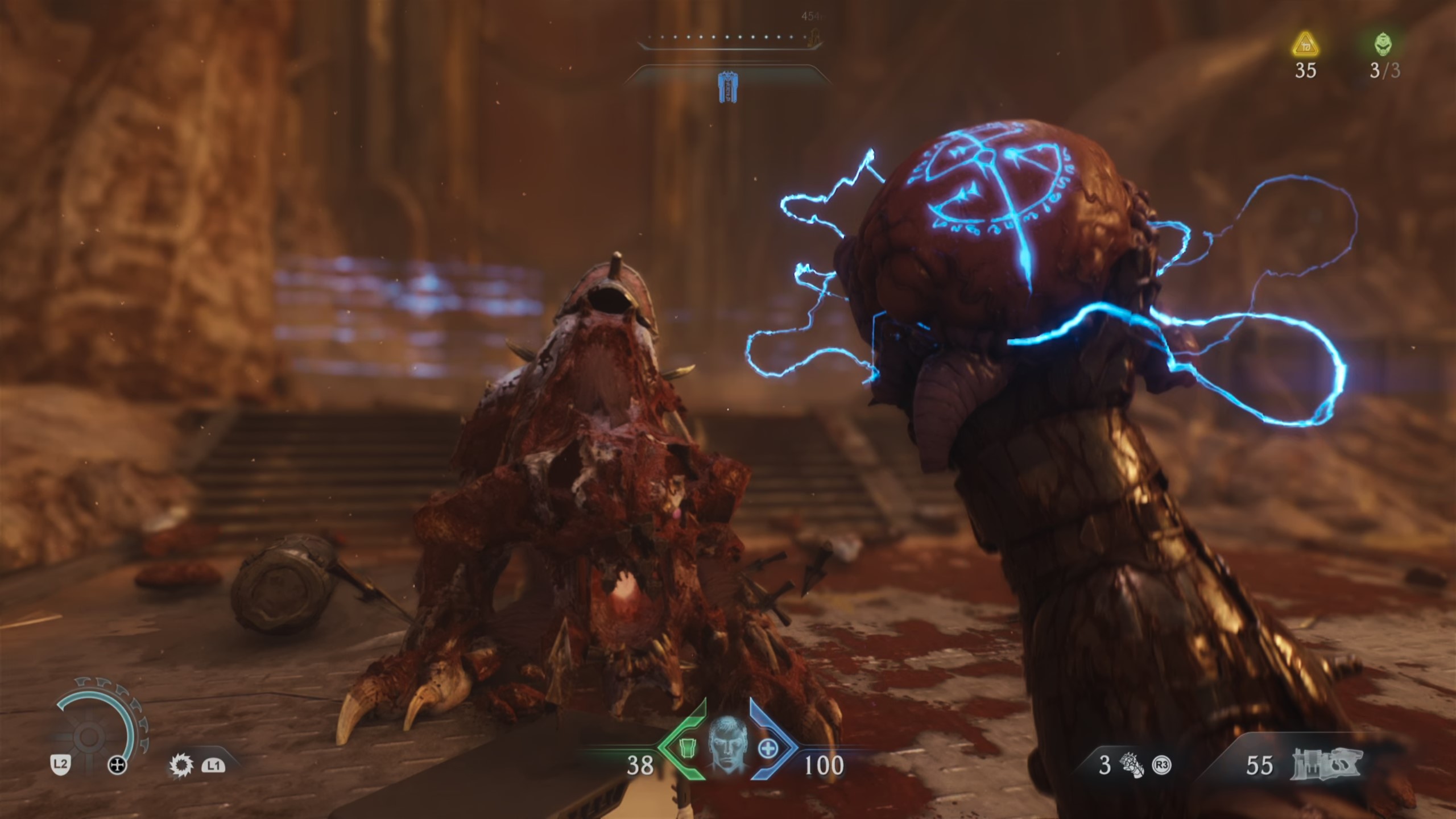
This is a prequel to the modern DOOM games with a techno-medieval vibe and a bigger push on story without smothering the action. The big mechanical swing is the “stand and fight” loop: you’re tougher, enemies broadcast falter/parry windows(indicated by the green glow of attacks), and the new Shield-Saw plus flail/chain-mace enable aggressive staggers, ricochets, and AoE armor breaks. It feels like the depth of Eternal with fewer inputs, and it clicks fast. id Software’s own PS Blog write-ups outline that design philosophy and the new setting beats (Cosmic Realm, Dragon and Atlan sequences) without spoiling set-pieces.
What lands
Combat reads clearer thanks to explicit falter cues; you’re rewarded for holding ground instead of circle-strafing forever.
The medieval kit integrates cleanly with classic DOOM weapons—Shield-Saw throws to pin heavies, flail charge attacks to chunk bosses, etc.
Level variety is strong, with a few giant “wow” arenas that let idTech 8 flex.
What doesn’t always
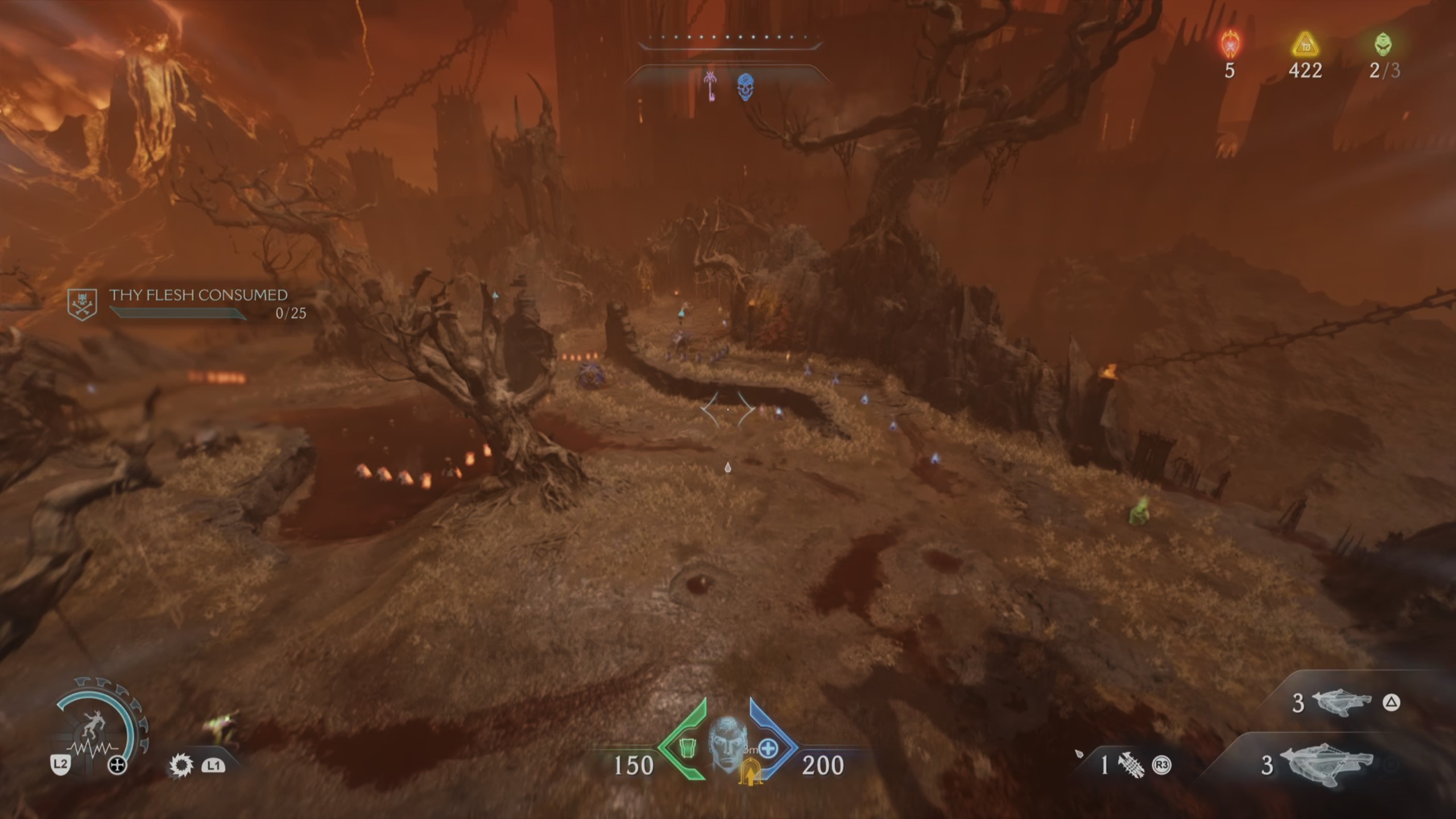
A handful of traversal/mech/dragon beats still feel like pacing valves rather than full-blooded mechanics; reviewers outside id have noted some unevenness in non-combat stretches.
PS5 performance & image quality
Target/frame-rate: PS5 runs at 60 fps, with id Software calling out a “buttery-smooth 60 on PlayStation” in pre-launch comms; in practice, most of the campaign holds 60 with occasional sub-60 dips during the absolute heaviest effects and enemy counts. There are no separate Quality/Performance mode toggles—it’s one tuned presentation on PS5 (and PS5 Pro).
Resolution: Image quality is sharp for a 60 fps shooter with temporal reconstruction doing a lot of lifting. PS5 Pro pushes a cleaner image than base PS5; PS5 Pro trades a touch of consistency for higher clarity while Series X tends to be the most stubbornly locked at 60 in edge-case firefights. If you own both consoles and care only about iron-clad stability, Series X has the slight edge; if you’re on PS5/PS5 Pro, you’re still getting an excellent presentation.
Loading & streaming: Loads are brief and streaming stutter is essentially a non-issue thanks to id’s asset strategy—typical id polish.
DualSense, 3D audio & UI polish
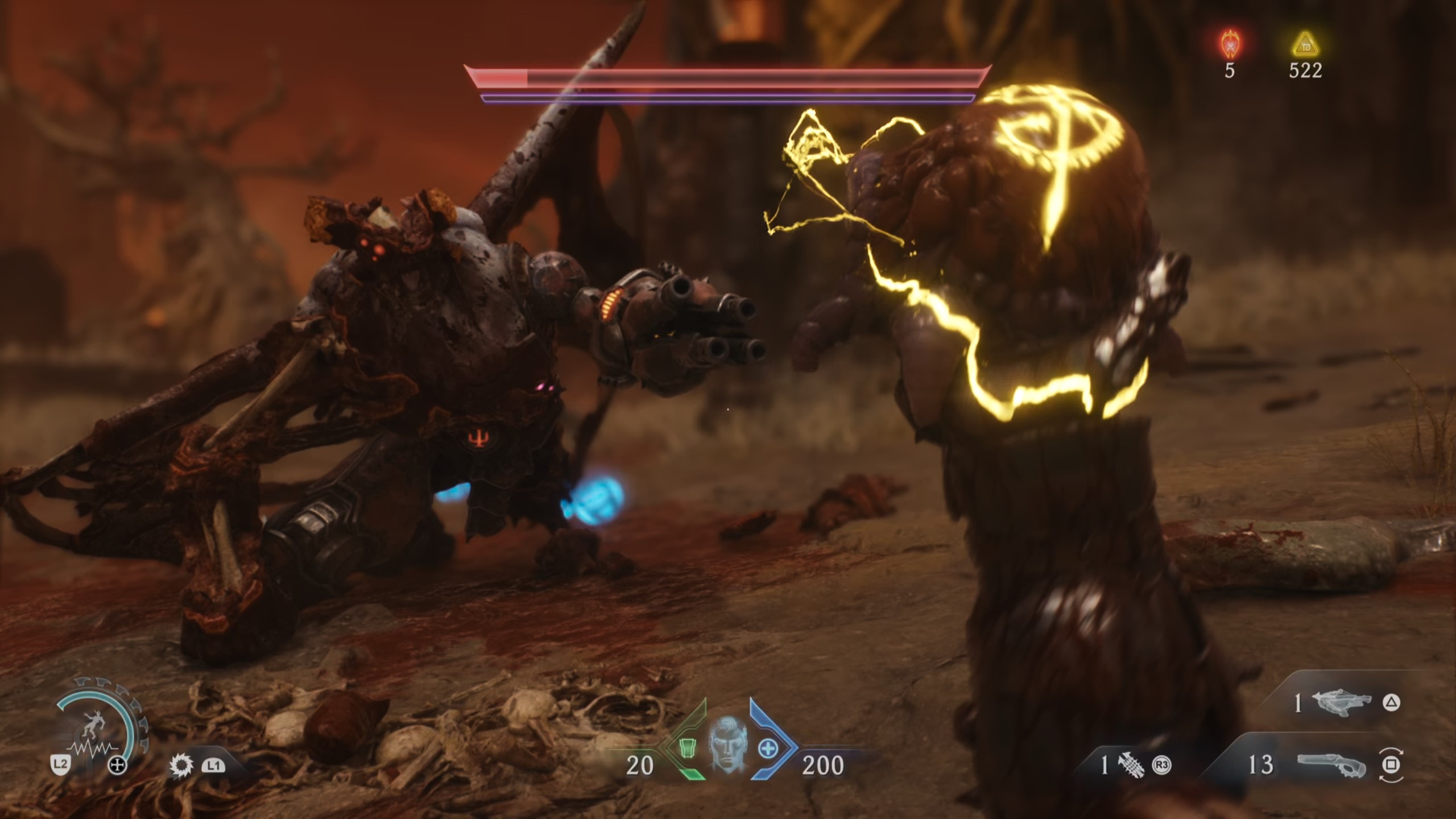
DualSense: Haptics and adaptive triggers are present but restrained—impactful enough on big weapon cycles and Shield-Saw throws without getting gimmicky. Critics covering the PS5 build called it “standard DualSense implementation” rather than a headline feature, which matches my experience recommendation: keep it on; it enhances feedback, it doesn’t redefine it.
Audio: Tempest 3D AudioTech plays beautifully with id’s mix—projectile reads and flankers are easy to localize, and the new score hits hard in arenas.
Visuals & tech (idTech 8)
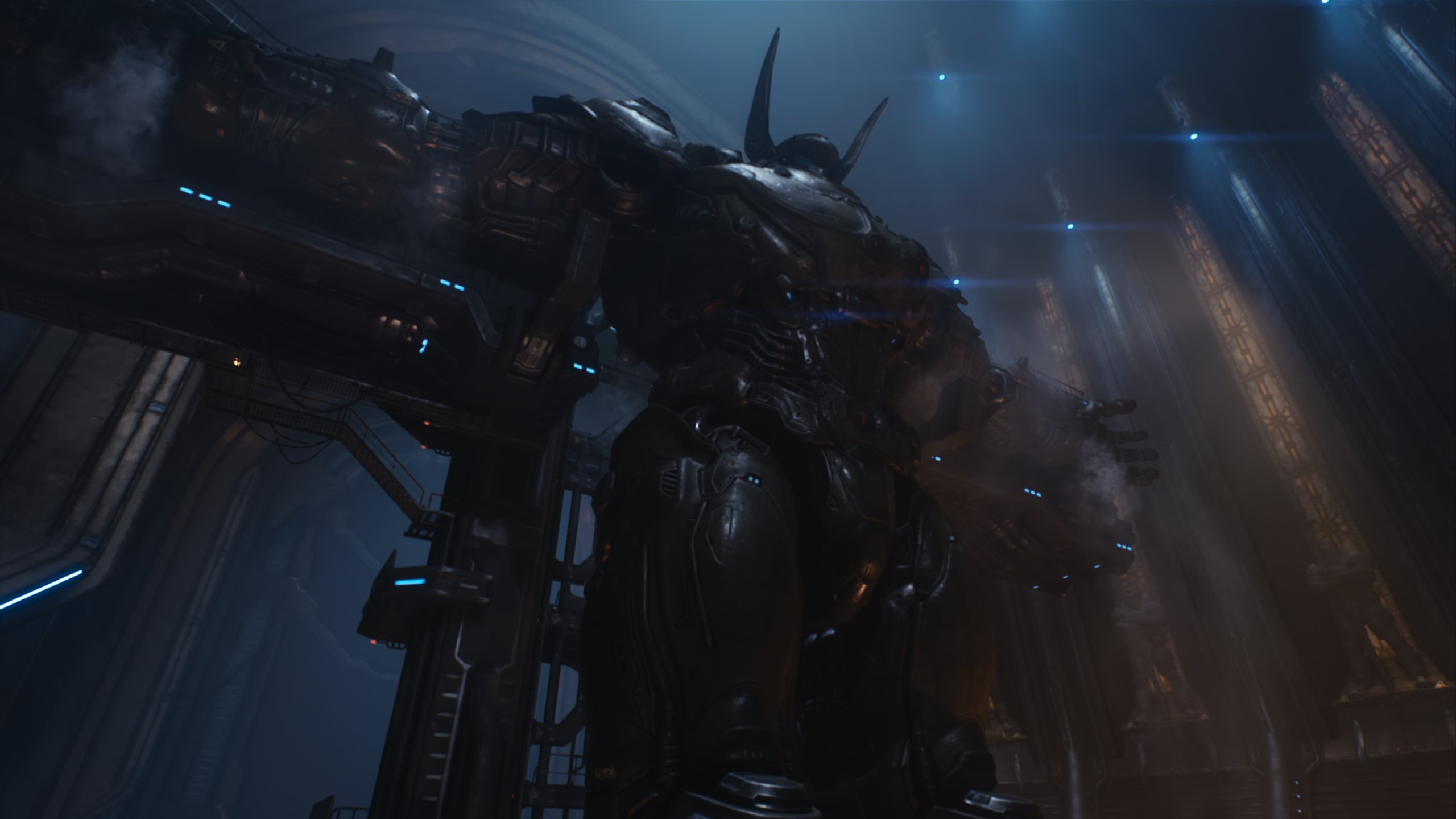
idTech 8 is the quiet star. You get denser enemy counts, longer vistas, and more reactive destruction than Eternal, with fully dynamic lighting (id mentions ray-traced workflows powering lighting; full path-tracing bells and whistles are a PC thing). The result on PS5 is striking, clean, and—crucially—stable at 60.
Difficulty, balance & post-launch updates
Launch difficulty & tweaks: Community feedback that the game skewed a bit easy on higher tiers prompted id to push a difficulty/balance update post-launch (harder enemy damage, leaner pickups, riskier missed parries). If you bounced off early for being too forgiving, it’s worth a revisit now.
Update 2 (current): The big “Ripatorium” update (live now) adds an endless arena/sparring mode with three arenas, a jukebox, encounter controls, combat refinements for dragon/Atlan/Slayer, and general balance passes across the campaign. Great for practicing parry timing and sandboxing loadouts.
Upgrades, collectibles & secrets
Like any great DOOM campaign, The Dark Ages rewards players who poke around corners and master its systems. On PS5, load times between retries are near-instant, making exploration and challenge-chasing painless.
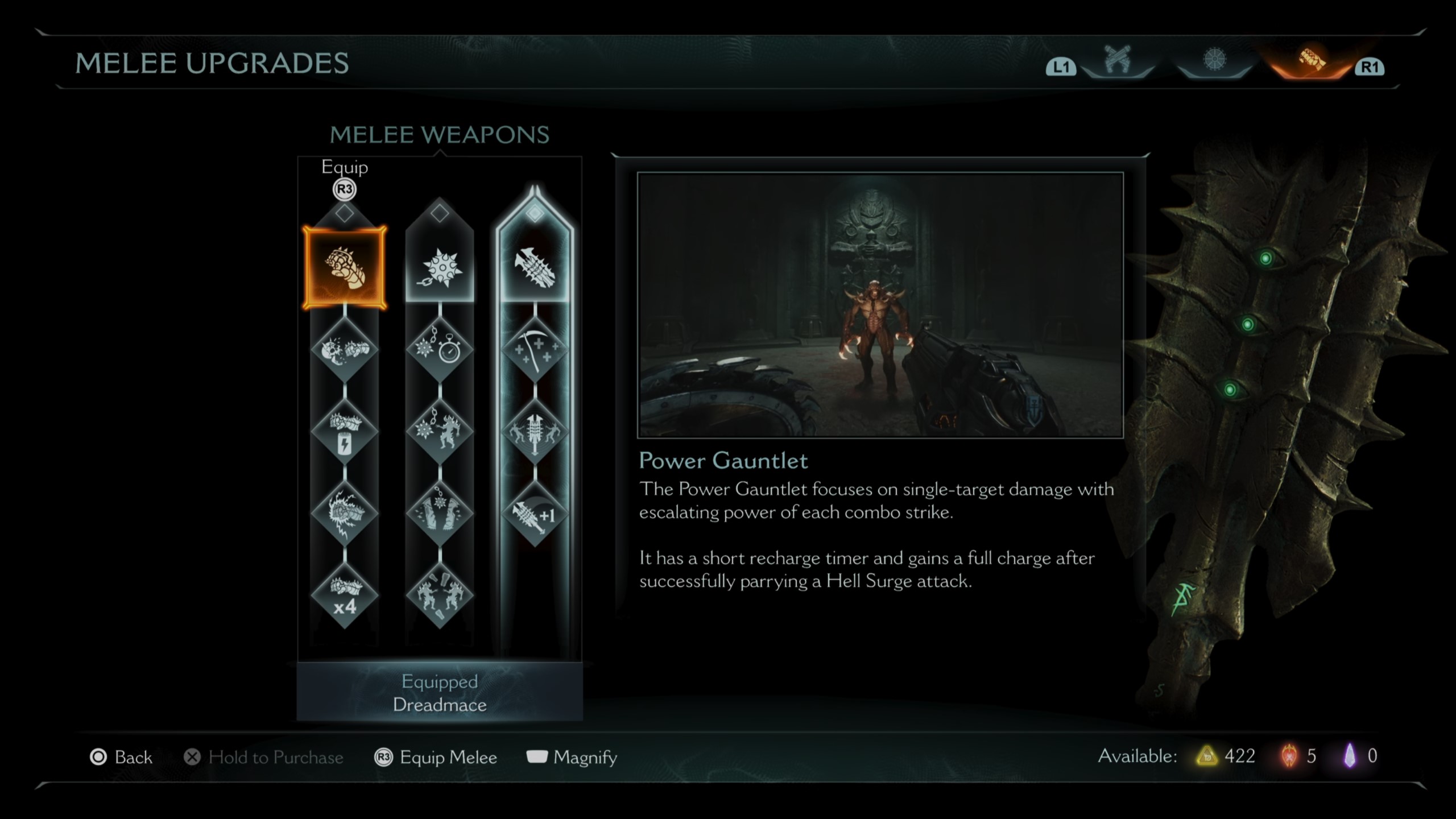
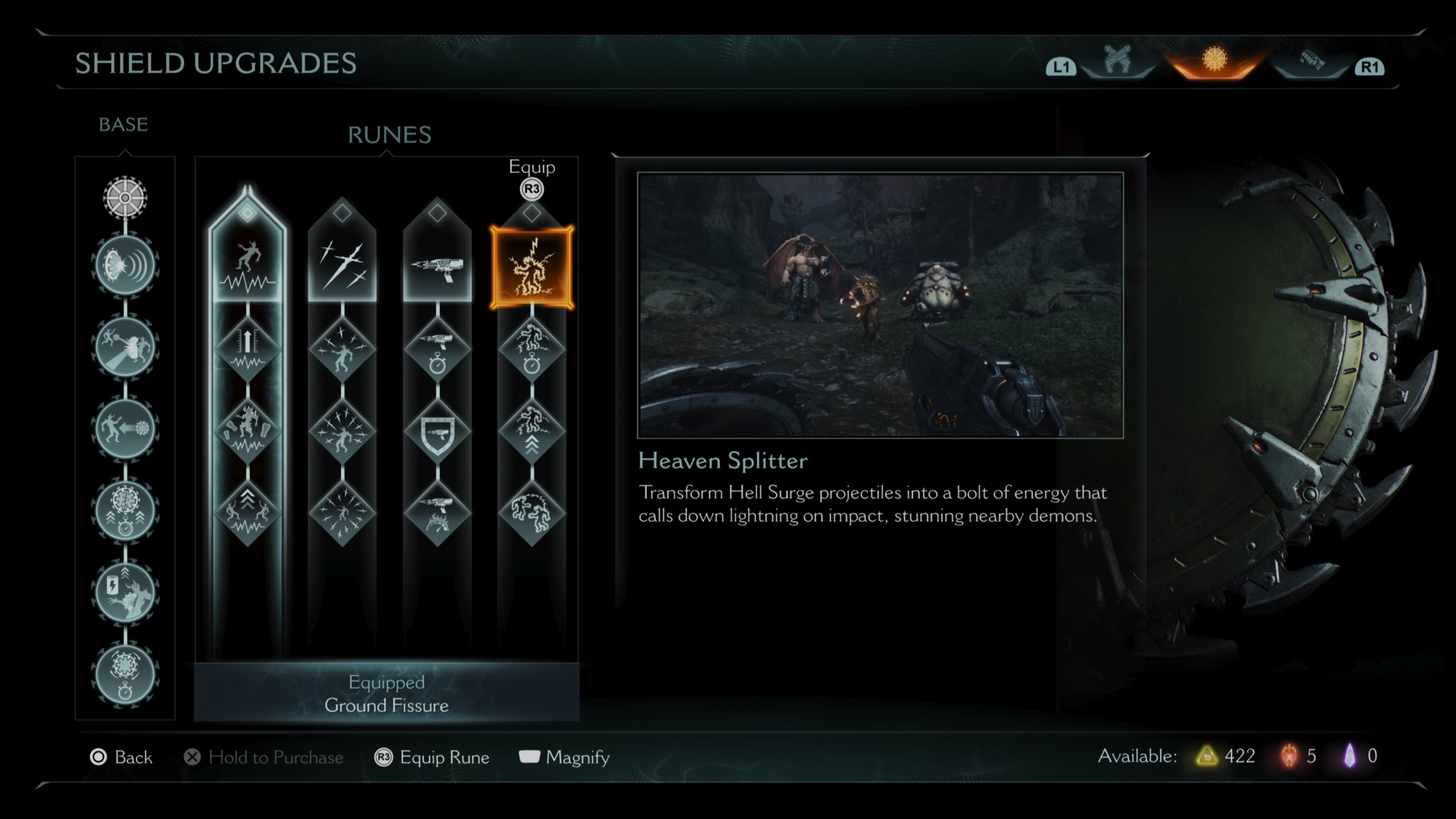
Upgrades: The Slayer’s arsenal grows steadily, with runes, shield augments, and weapon mods that let you tailor combat flow—whether that’s faster parries, stronger ricochets, or beefier health/armor top-ups. Upgrades are meaningful but never overwhelming, keeping the emphasis on skill rather than grind.
Collectibles: From lore tablets and codex pages to cosmetic unlocks, collectibles are scattered through levels in ways that encourage curiosity without slowing momentum. Audio logs and lore drops lean into the medieval techno-fantasy, adding flavor for players who want it while remaining skippable.
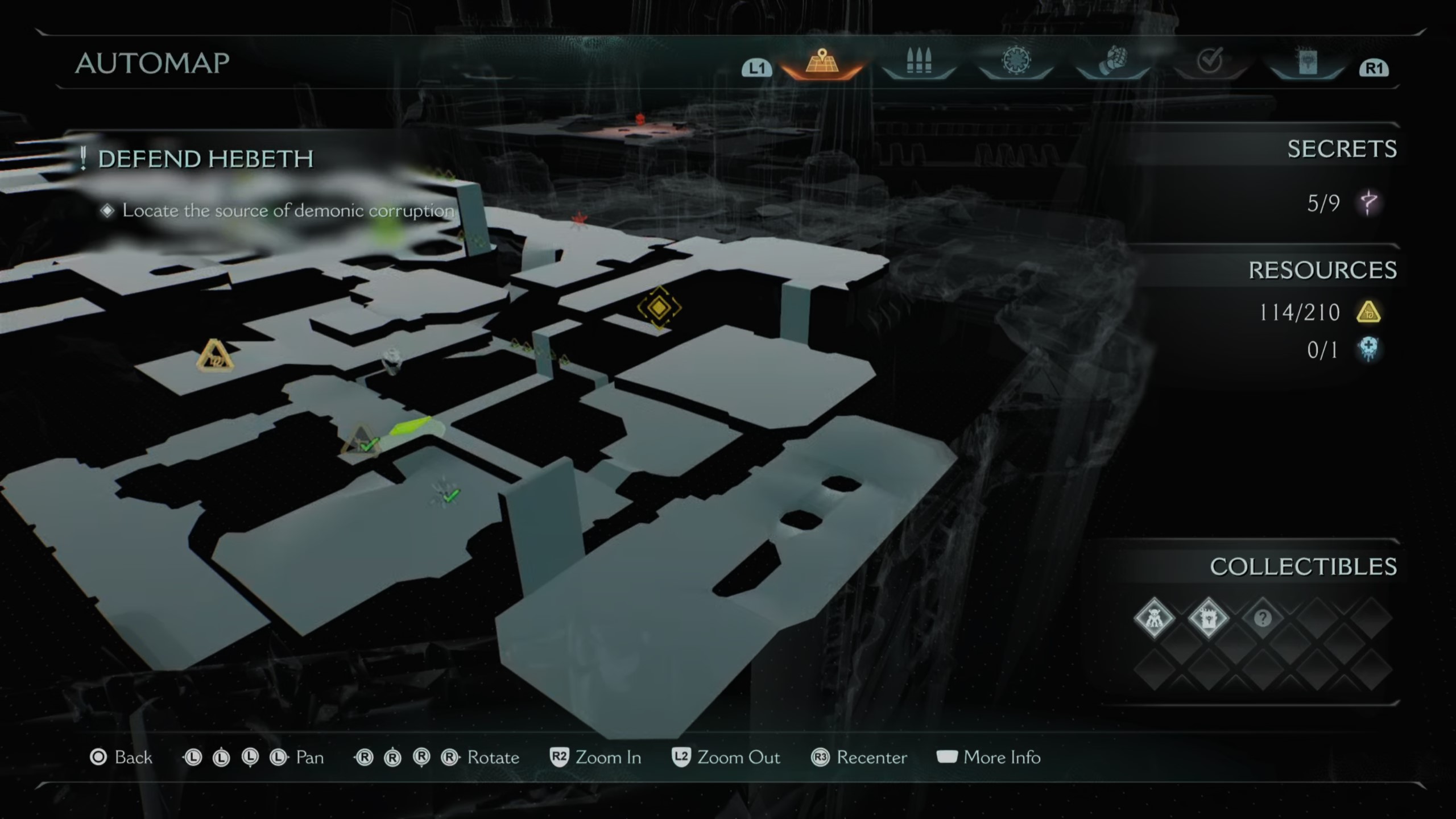
Secrets: Classic DOOM DNA is alive and well. Secret rooms, platforming detours, and hidden key switches give each map replay value. Finding them feels clever rather than tedious, with the automap and visual cues helping without giving everything away.
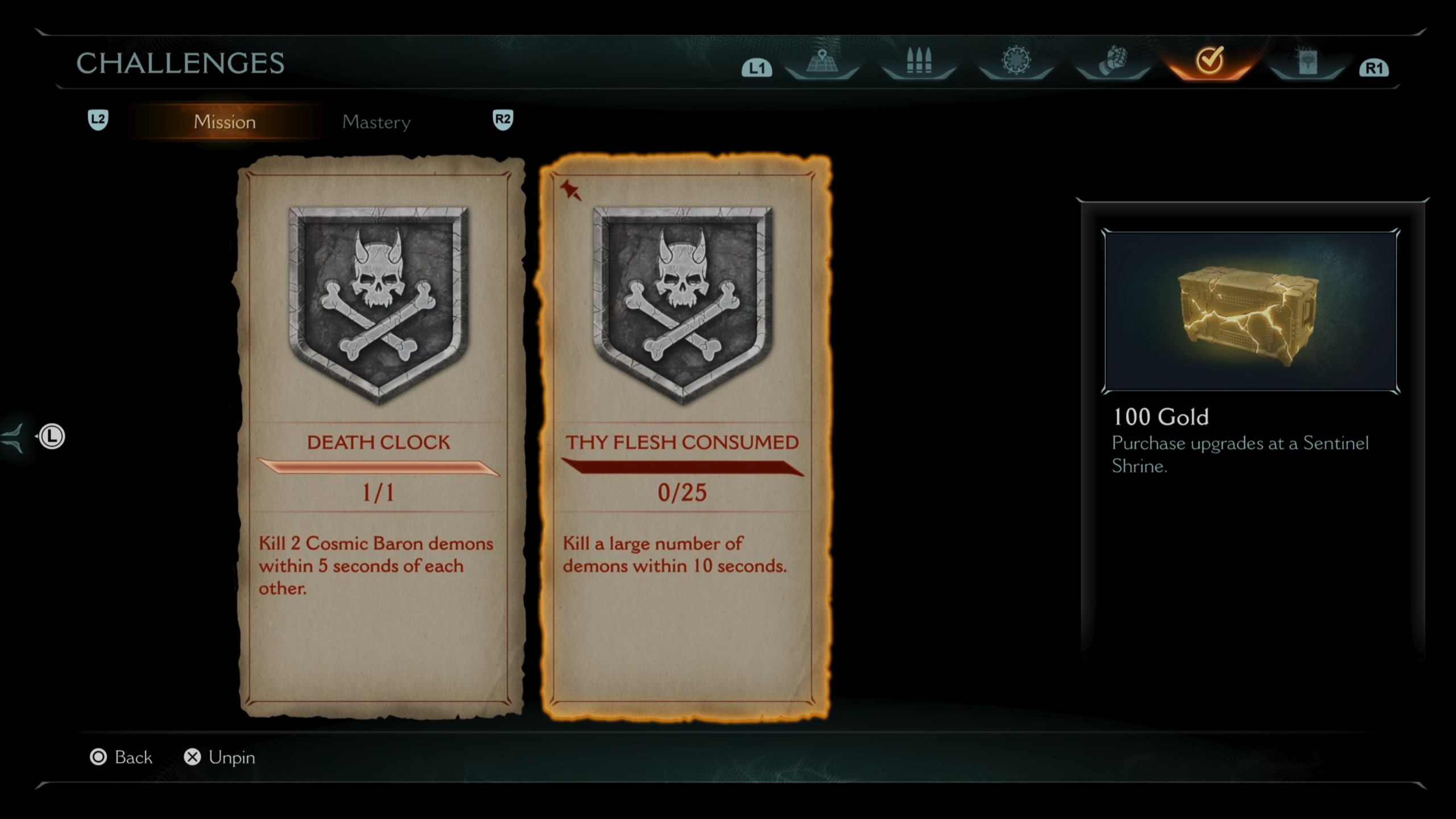
Challenges: Each level comes with optional combat trials and mastery goals—parry chains, kill thresholds, or resource efficiency tasks. They push you to engage with mechanics beyond brute force. The addition of the Ripatorium in Update 2 expands this, letting you design custom encounters or run endless waves to sharpen timing and loadout choices.
Taken together, these systems make The Dark Ages as much about exploration and mastery as it is about forward momentum. On PS5, the snappy reloads and clean HUD support that loop beautifully.
How long is it?
id pitched 22 levels and a chunky, exploration-friendly campaign. Expect ~12–18 hours for a first run depending on difficulty and collectibles, with strong replay value if you chase mastery and higher tiers.
Other Platforms comparison:
Series X: marginally steadier 60 in worst-case encounters.
PS5 Pro: the cleanest image on PlayStation and generally excellent performance, but still 60 fps-only.
PC: the tech showpiece (higher frame rates, advanced RT features) with fans calling it an “expertly-crafted PC release” that scales beautifully. If you’re frame-rate-hungry above 60, PC’s your path.
Accessibility & options (high level)
Readable UI, re-mappable controls, granular difficulty (and now tougher high-end tuning), aim options, FOV slider, and audio mix tweaks are all here. It’s not the most expansive accessibility suite on PS5, but it covers the basics and then some for an arena shooter. (id’s patch notes highlight iterative balance/options work.)
On PS5, Doom: The Dark Ages is a brutal, confident single-player campaign with smarter, heavier combat than Eternal, rock-solid tech, and just enough experimentation to keep the rip-and-tear loop fresh. If you want an ultra-polished 60 fps shooter on a couch with great audio and subtle DualSense feedback, this absolutely delivers—though PS5 doesn’t offer high-frame-rate modes and can see brief dips in the most chaotic scenes compared to Xbox Series X.
Final Score: 8.5/10
If you own a PS5 (or PS5 Pro) and crave a single-player, 60 fps, zero-fluff shooter that respects your time and reflexes, Doom: The Dark Ages is easy to recommend. The combat loop is cleaner and more readable than Eternal, the presentation sings on a TV with 3D audio, and id’s post-launch support is already meaningful. The only real knocks on PlayStation are no high-FPS mode and the fact that Series X can be a hair steadier in outlier firefights. For most players on PS5, it’s a phenomenal rip-and-tear return.
 la discuții