

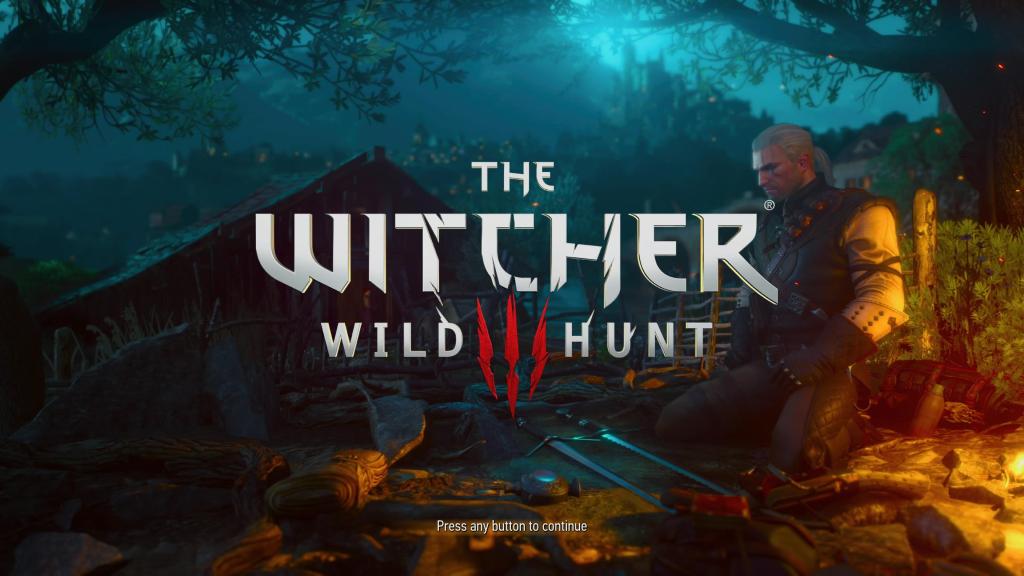
De la lansarea sa, în mai 2015, The Witcher 3: Wild Hunt a fost considerat unul dintre cele mai mari RPG-uri din toate timpurile. Dezvoltat de CD Projekt Red, jocul este un RPG open-world, axat pe poveste, plasat în lumea complexă și moral ambiguă a romanelor Witcher scrise de Andrzej Sapkowski. Având rolul de încheiere a călătoriei lui Geralt din Rivia, după The Witcher (2007) și The Witcher 2: Assassins of Kings (2011), jocul reușește, de asemenea, să ofere o experiență excelentă de sine stătătoare pentru noii jucători.
Ceea ce diferențiază acest joc este narațiunea captivantă, o lume extraordinar de detaliată, personajele complexe și alegerile cu adevărat semnificative. La momentul lansării, The Witcher 3 a redefinit conceptul de RPG open-world, stabilind noi standarde pentru designul misiunilor, profunzimea narativă și impactul deciziilor jucătorului. Chiar și după ani de zile, datorită numeroaselor actualizări, unui remaster next-gen și unei comunități active de modding, The Witcher 3 rămâne un etalon al excelenței în RPG-uri.
Această recenzie va explora toate aspectele jocului, inclusiv narațiunea, sistemul de luptă, designul lumii, complexitatea personajelor, expansiunile și detaliile tehnice, oferind o analiză detaliată a motivului pentru care The Witcher 3 este considerat unul dintre cele mai bune jocuri realizate vreodată. Recenzia va continua în limba engleză.
Story & Writing: A Deeply Mature and Emotionally Engaging Narrative
At its core, The Witcher 3: Wild Hunt follows the story of Geralt of Rivia, a professional monster hunter known as a Witcher, as he embarks on a deeply personal quest to find his adopted daughter, Ciri. She is being pursued by the Wild Hunt, a mysterious and spectral force that serves as the game’s primary antagonists. However, what truly elevates the game’s story beyond a simple „hero’s journey” is the layered political intrigue, morally ambiguous decisions, and personal relationships that form the foundation of the narrative.
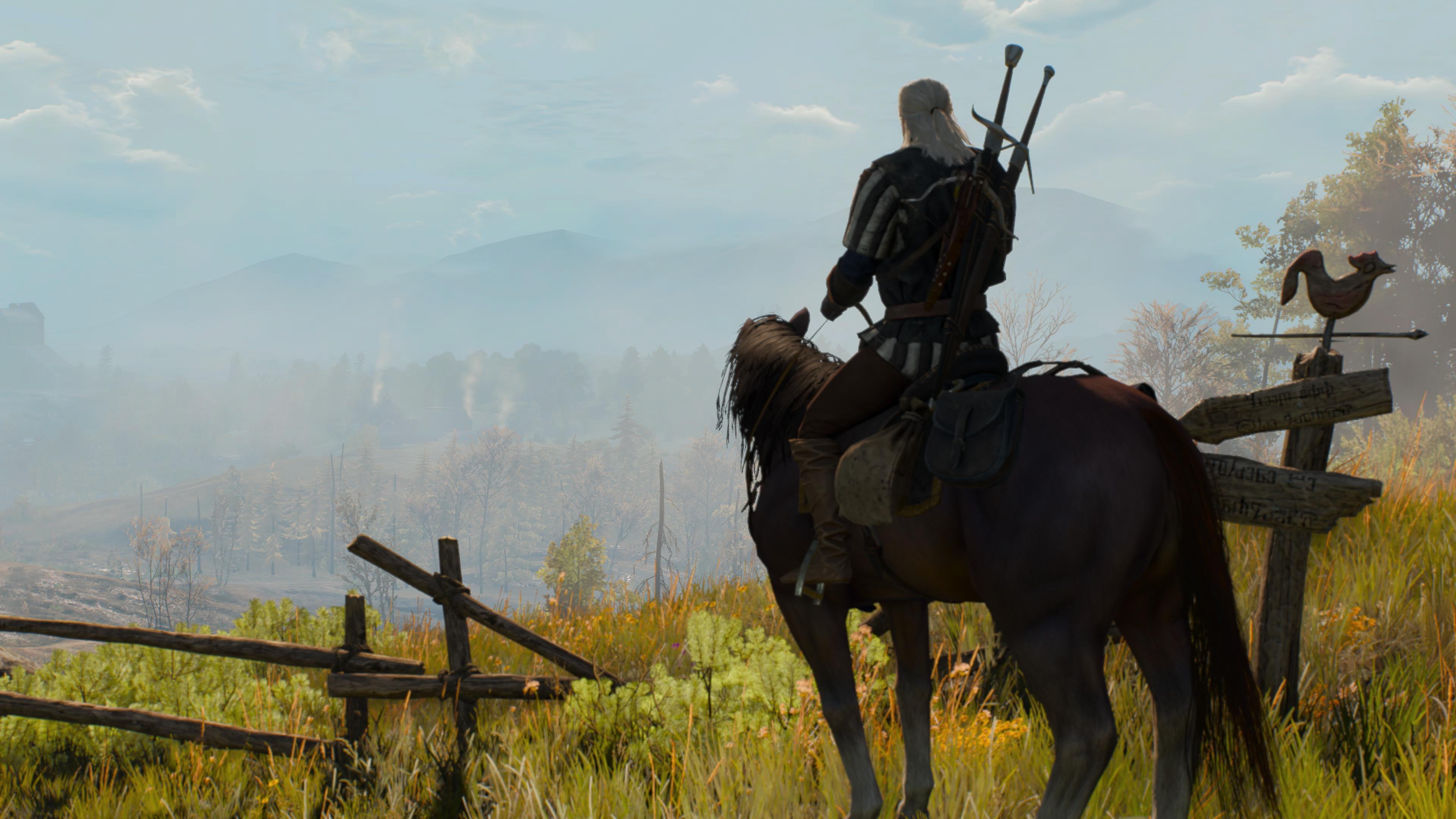
Unlike many RPGs that present clear-cut good and evil choices, The Witcher 3 operates in a world where morality is often blurred. Decisions are not simply about choosing the „right” or „wrong” path; they are about navigating difficult choices that have real, often unforeseen, consequences.
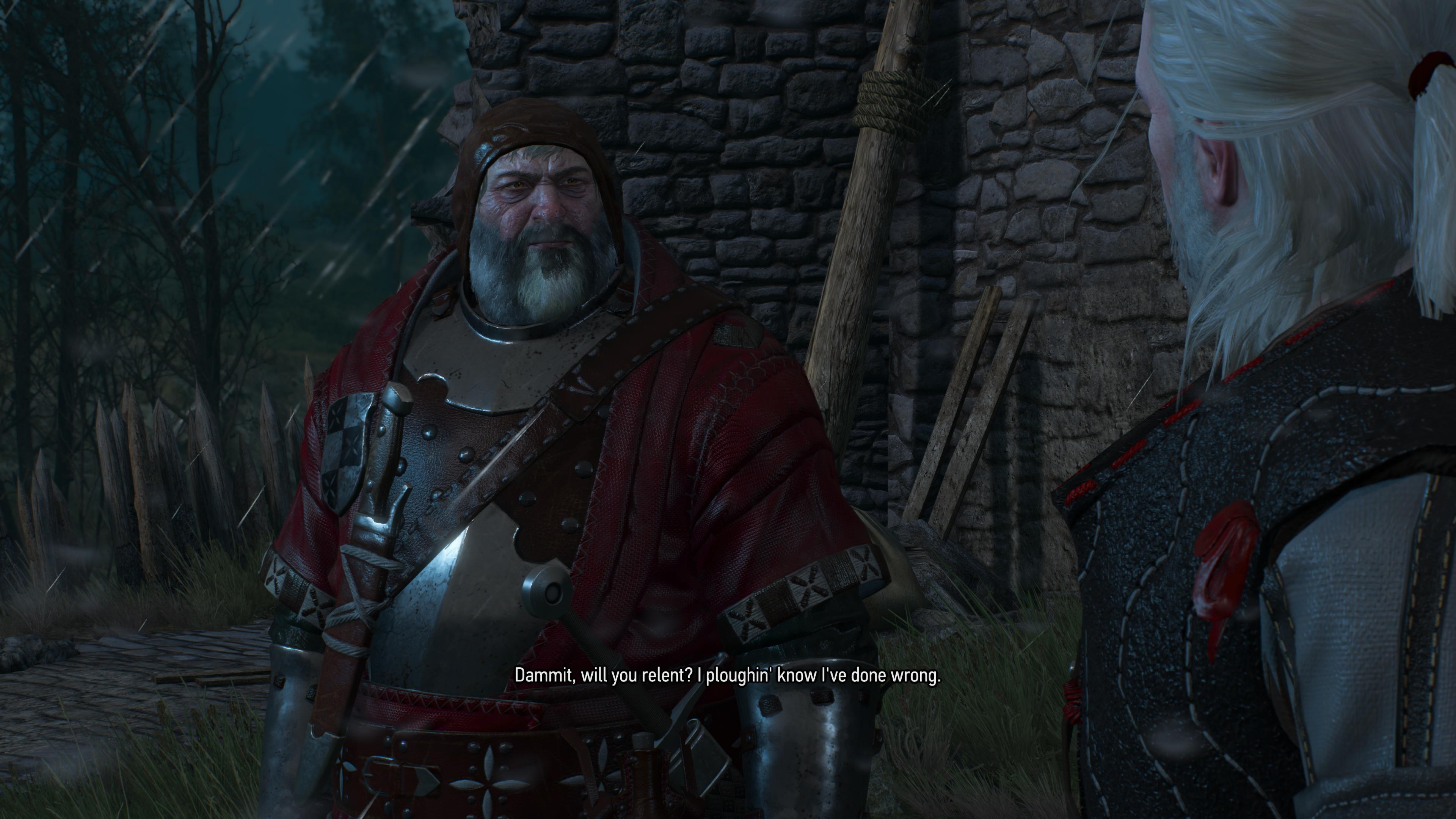
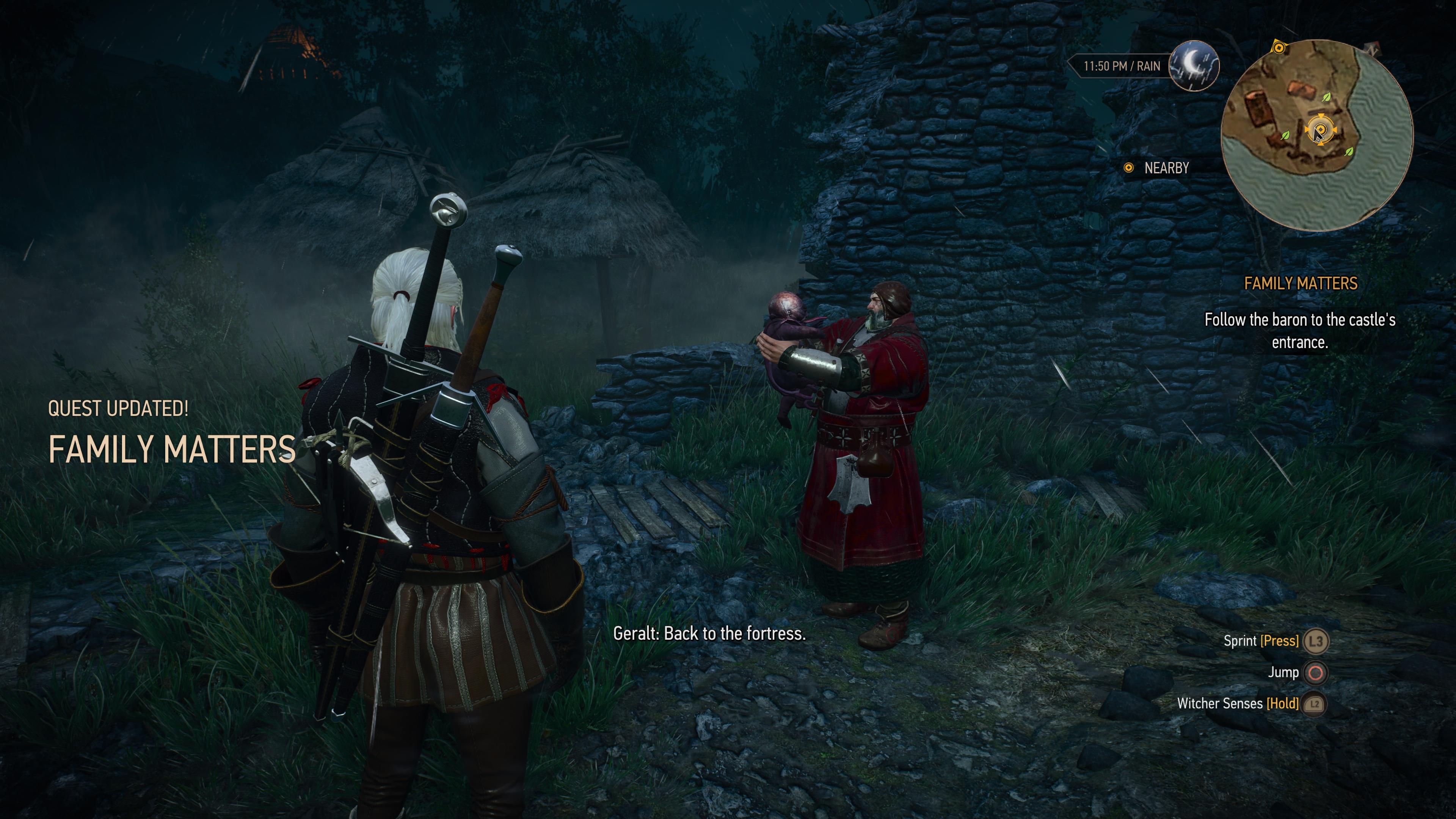
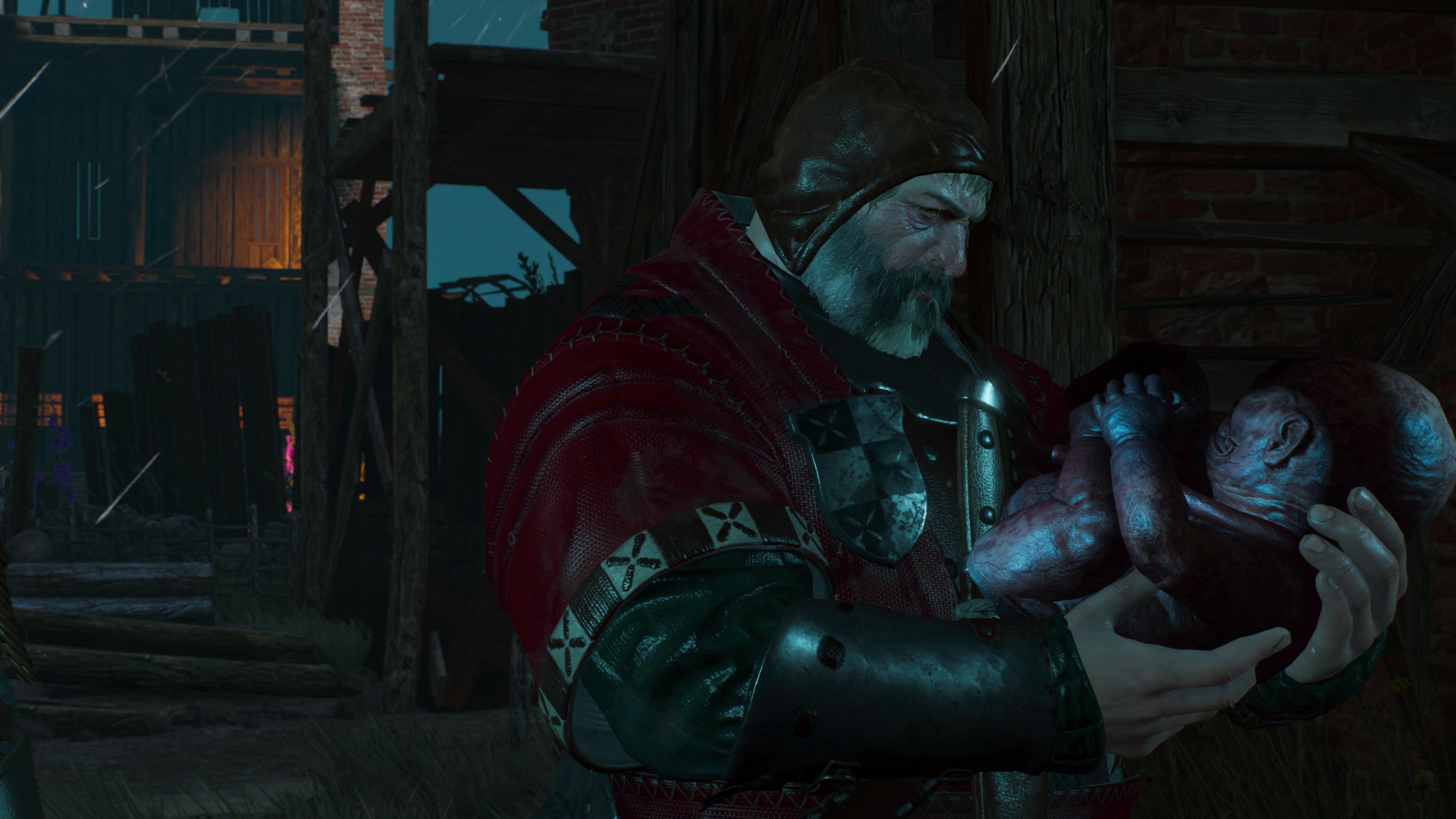
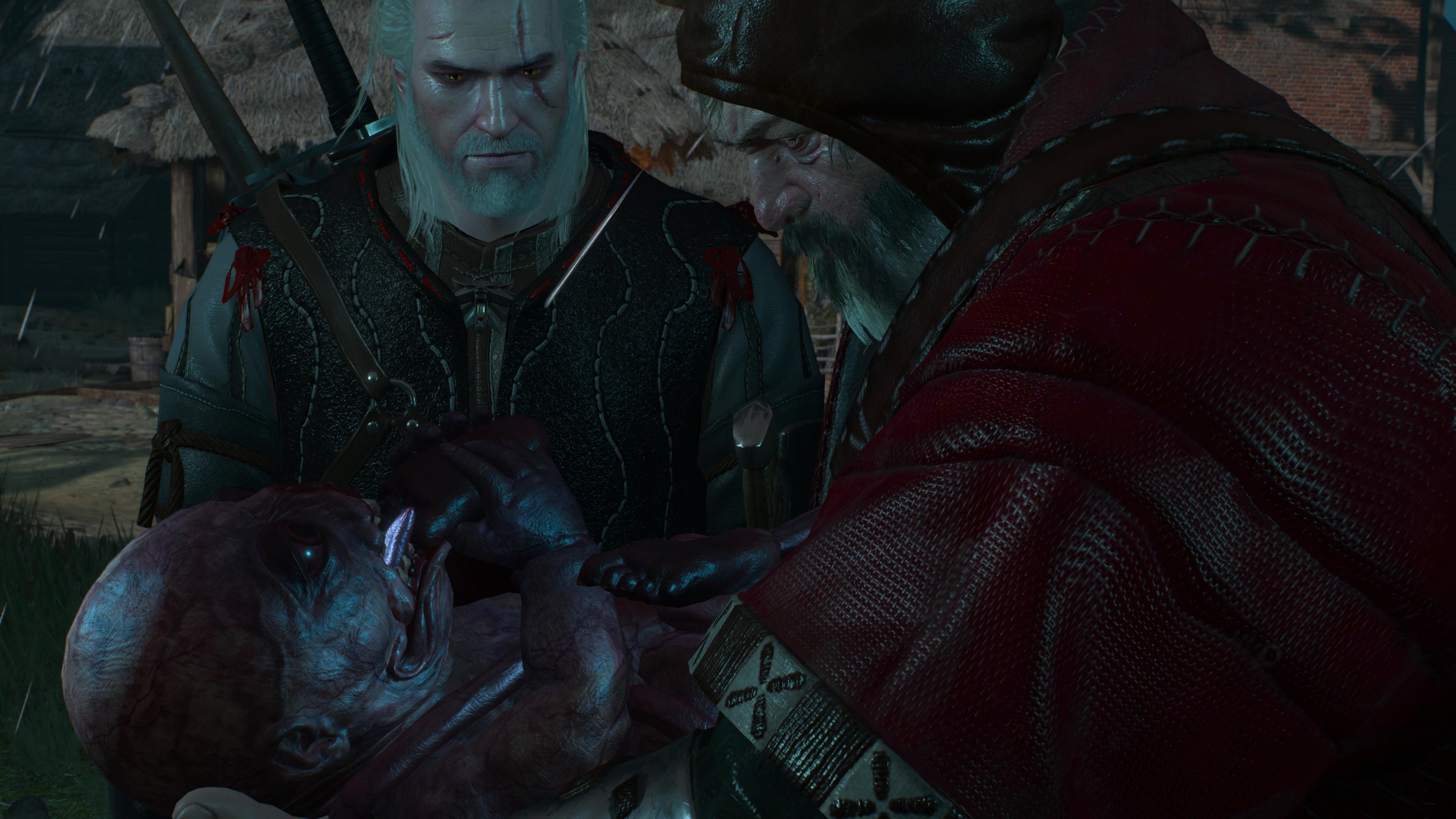
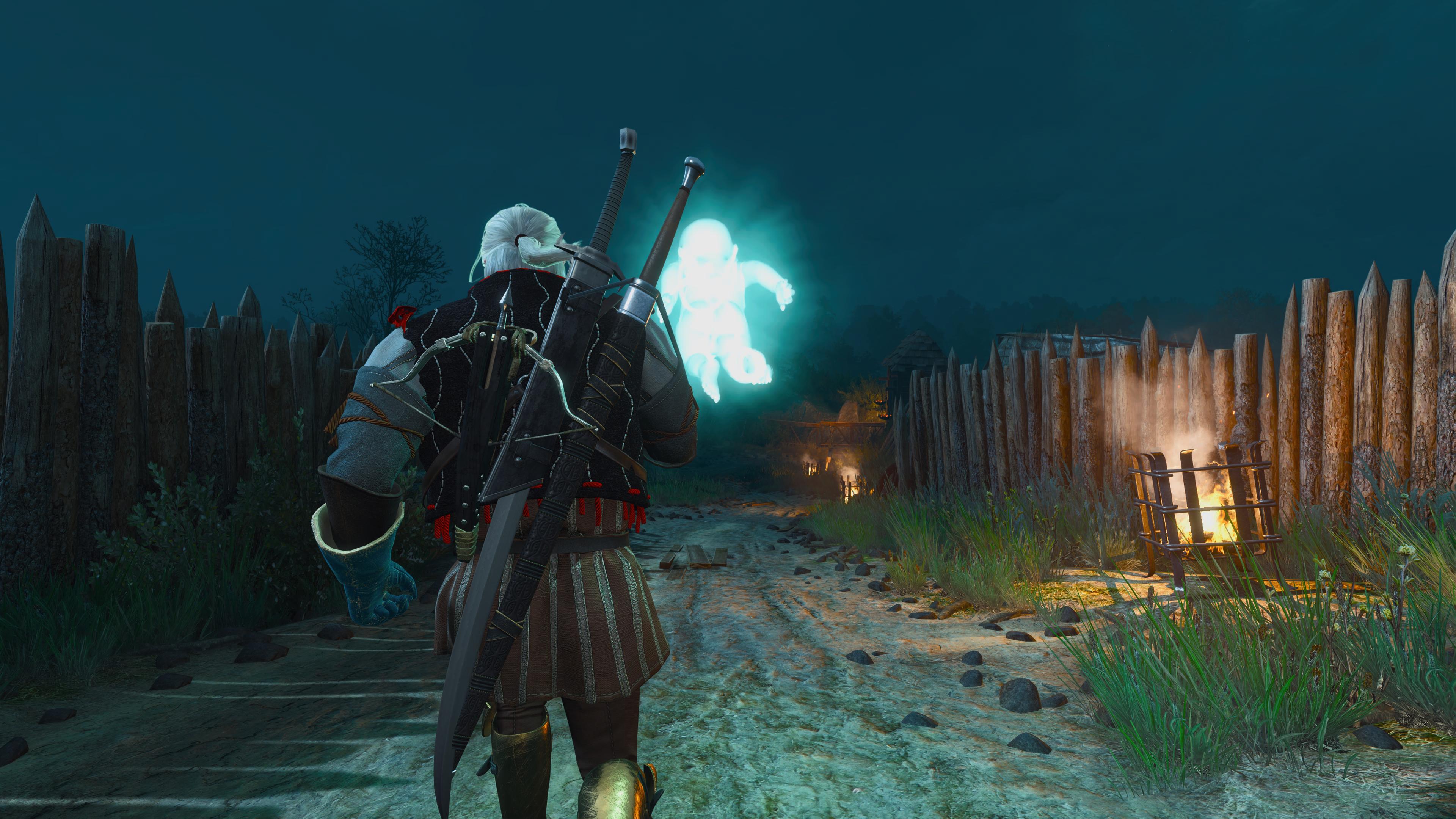
One of the best examples of this is the infamous Bloody Baron questline, which is often cited as one of the greatest side quests in gaming history. This storyline follows Baron Phillip Strenger, a ruthless warlord with a dark past. As Geralt investigates the disappearance of the Baron’s wife and daughter, he uncovers a tragic and deeply human tale of domestic abuse, regret, and the consequences of one’s actions. Depending on the player’s choices, the story can end in a variety of ways, some of which are heart-wrenching and others that provide a bittersweet sense of closure.

The political landscape of the world also plays a significant role in shaping the narrative. The Northern Kingdoms are at war with the powerful Nilfgaardian Empire, and as Geralt travels through war-torn lands, he can influence the conflict in subtle but meaningful ways. Whether siding with one ruler over another or helping commoners survive in a land ravaged by war, every decision adds another layer to the game’s complex world-building.
One of the most impactful elements of the story is Ciri’s fate, which is determined by the player’s actions throughout the game. Unlike many RPGs that force players into a predetermined ending, The Witcher 3 allows for multiple conclusions that feel earned and organic. Depending on how Geralt guides Ciri through her struggles, she may ascend to the throne as Empress of Nilfgaard, forge her own path as a wandering Witcher, or tragically meet a darker fate. These endings are not determined by a single choice at the end of the game but are instead the result of small, seemingly inconsequential decisions made throughout the journey.

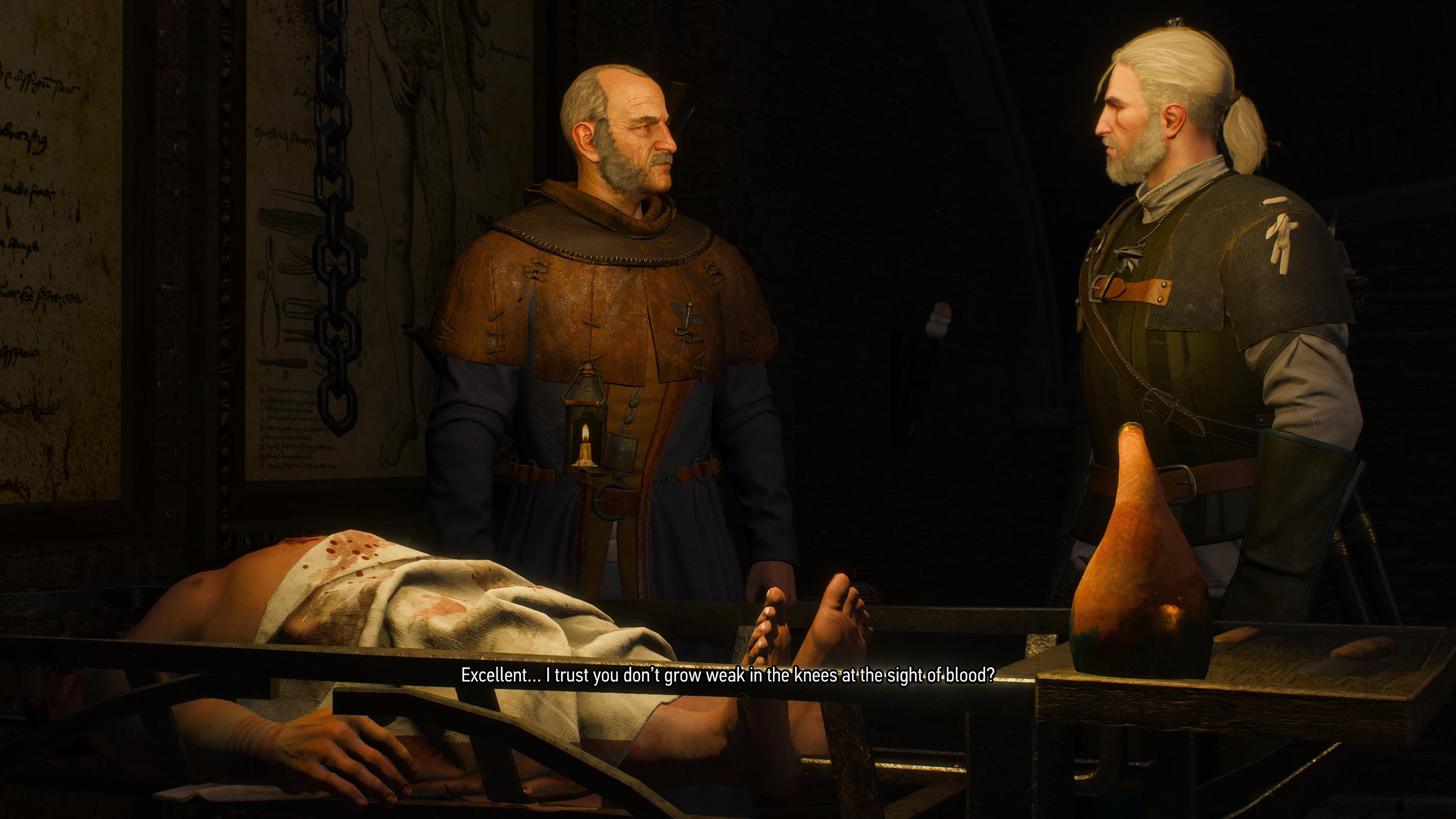
Another standout aspect of The Witcher 3 is its side quests. Unlike many RPGs where side quests feel like filler content designed to pad the game’s length, every side story in The Witcher 3 is given the same level of attention as the main plot. One example is the quest „A Towerful of Mice”, which unfolds as a supernatural horror story involving a haunted island, a tragic love affair, and a gruesome curse. Similarly, „Carnal Sins” plays out like a detective-style murder mystery, forcing players to track down a serial killer who is targeting Novigrad’s elite. Even seemingly mundane tasks, such as monster contracts, are given depth and backstory, making every encounter feel meaningful.
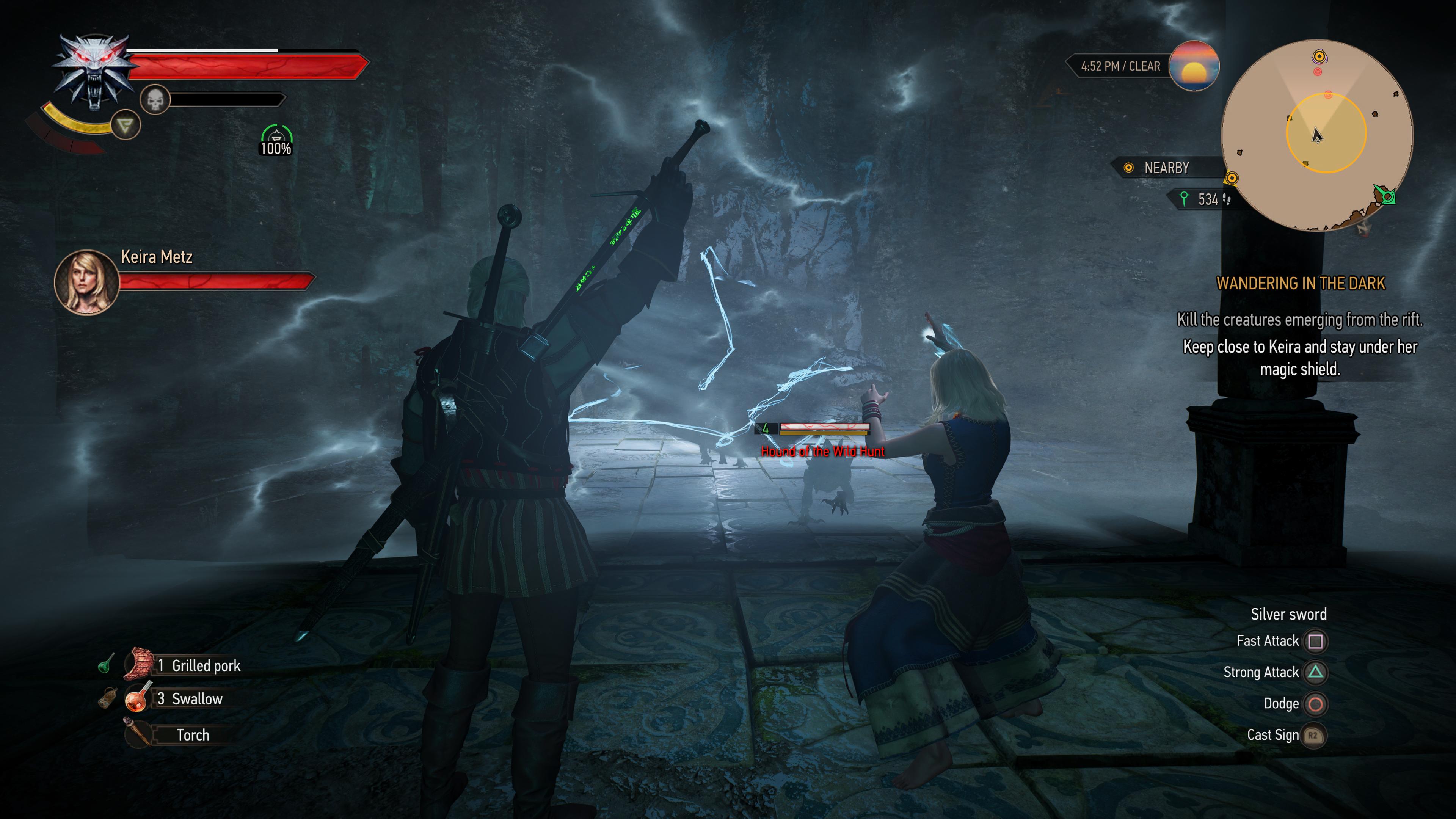
Overall, the writing in The Witcher 3 is superb, filled with intriguing characters, powerful emotional moments, and morally challenging choices that make the world feel alive and immersive.
Gameplay: Mastering the Art of the Witcher
At its core, The Witcher 3: Wild Hunt delivers a deep and rewarding gameplay experience that blends fluid combat, tactical preparation, and meaningful RPG progression. Unlike many action RPGs where battles are purely reflex-based, The Witcher 3 emphasizes strategy, requiring players to study enemy weaknesses, make use of signs and alchemy, and refine their combat skills. Every fight is dynamic, encouraging adaptability and mastery of Geralt’s many abilities.
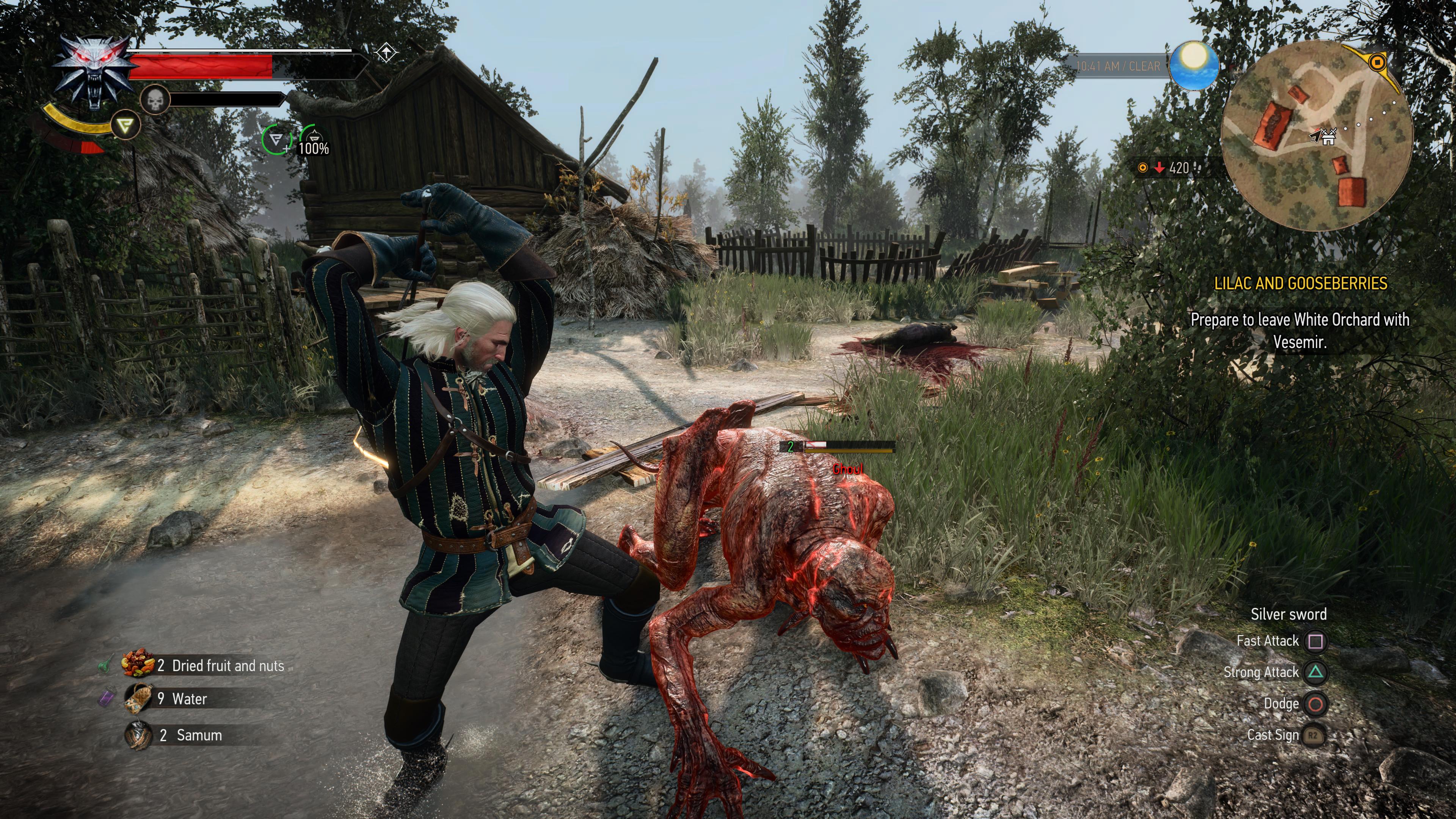
Combat is a balance of precision and strategy. Geralt wields two swords — one for humans and one for monsters — each requiring a different approach. Fast attacks allow for quick and efficient strikes against lightly armored enemies, while strong attacks deal heavy damage but are slower, making them ideal against tougher foes. Dodging and rolling play a crucial role in staying alive, as reckless aggression is often punished by powerful enemies. Dodges provide small evasive movements to avoid quick strikes, while rolling covers more distance and is useful against larger attacks. Parrying and counterattacking add another layer of complexity, as human enemies can be deflected and countered instantly, while monsters demand a more evasive approach, requiring players to read their movements carefully.
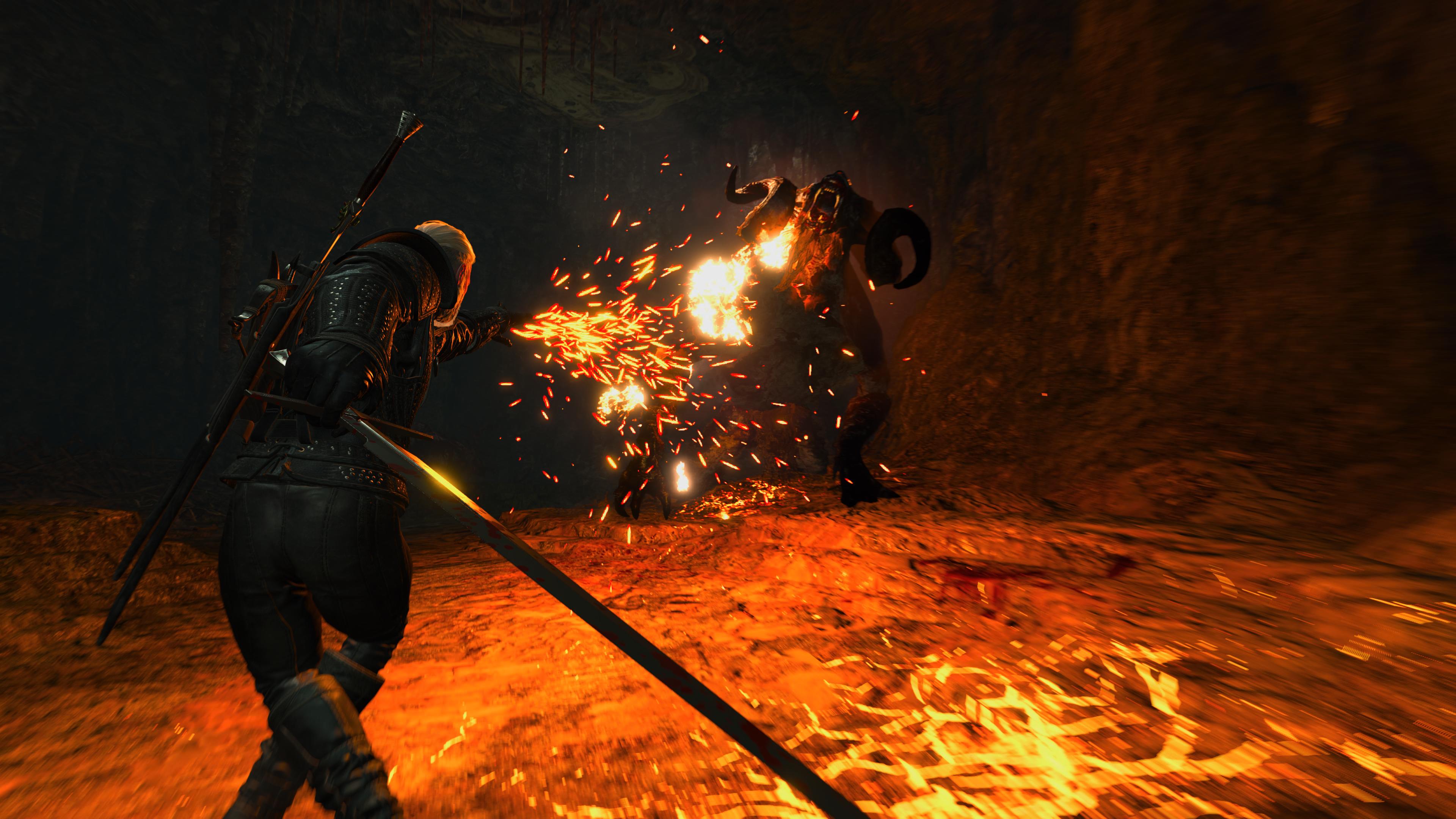
Beyond swordplay, Geralt also has access to a range of magic-like abilities known as Witcher Signs, each serving a specific purpose in combat. Aard unleashes a telekinetic blast capable of staggering enemies and even sending them flying. Igni summons flames to burn opponents, with more advanced versions turning it into a continuous stream of fire. Yrden creates a magical trap that slows enemies, particularly effective against specters and wraiths. Quen provides a protective shield, absorbing damage and, when upgraded, reflecting it back at attackers or even healing Geralt. Axii, a mind-control ability, can temporarily stun enemies in battle or be used in conversations to manipulate dialogue choices. Signs give Geralt a tactical edge, offering both offensive and defensive options that complement his swordplay.
Character progression is highly customizable, allowing players to shape Geralt’s abilities to fit their preferred playstyle. The skill tree is divided into combat, signs, alchemy, and general abilities. Focusing on combat enhances swordplay by increasing attack damage, critical hits, and attack speed, while investing in the sign tree strengthens magic, reducing stamina costs and adding devastating effects to spells. Alchemy skills improve potions, bombs, and blade oils, allowing Geralt to fight more effectively with chemical enhancements. The general abilities provide universal bonuses, such as increased health regeneration, better stamina recovery, and improved mounted combat. Every skill choice impacts gameplay in meaningful ways, ensuring that character progression remains engaging throughout the adventure.
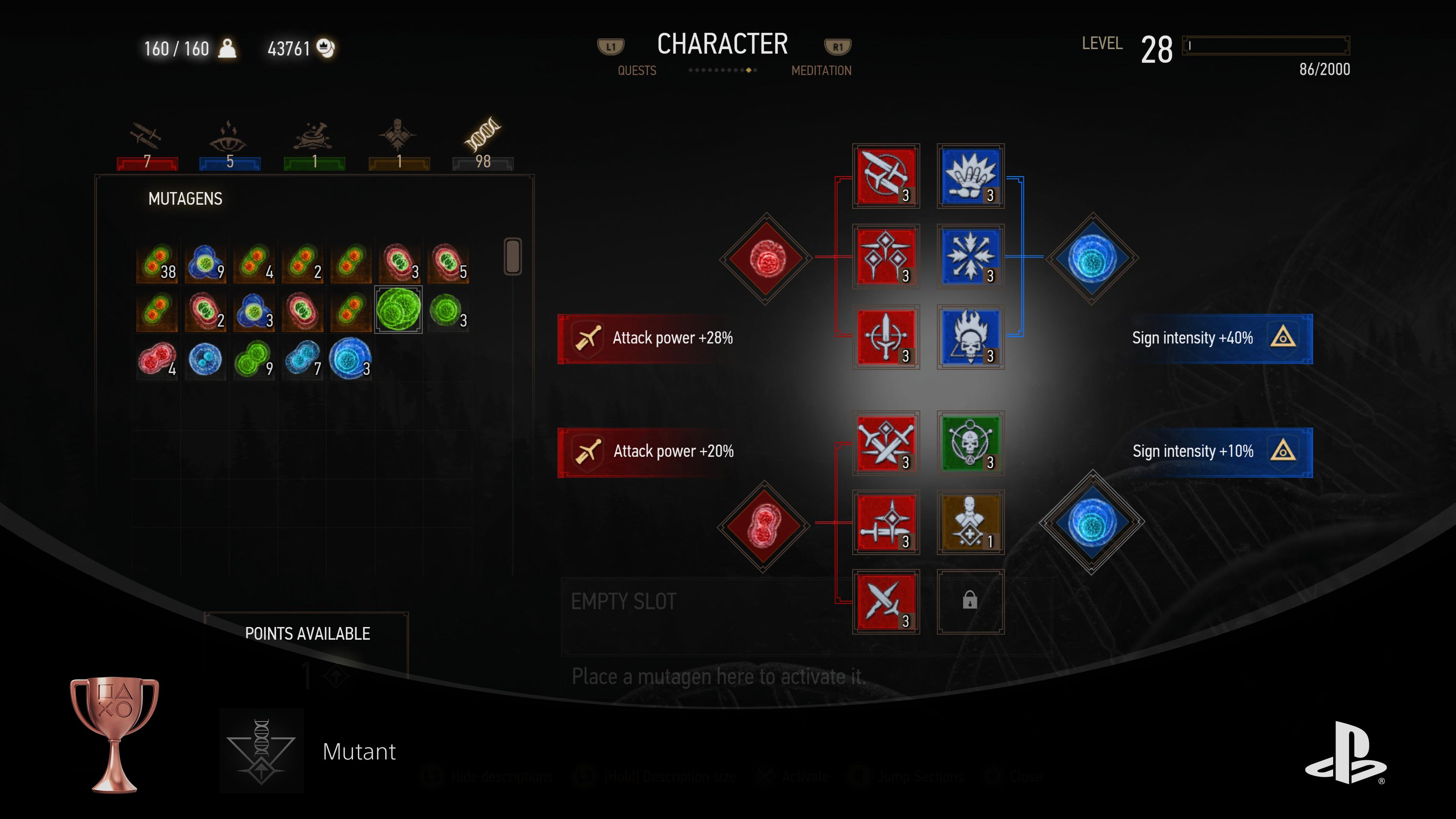
One of the most unique aspects of The Witcher 3’s progression system is the use of mutagens, special substances that grant passive bonuses. These come in three types: red for combat, blue for magic, and green for alchemy. When paired with matching abilities, mutagens provide additional stat boosts, making skill allocation an important aspect of character development. The Blood and Wine expansion further expands this system with advanced mutations, allowing for even greater customization. Some of these include Euphoria, which increases Geralt’s damage based on toxicity levels, making potion-heavy builds incredibly powerful, or Bloodbath, which significantly boosts melee damage based on enemy health. Others, like Second Life, allow Geralt to resurrect upon death once every two minutes, providing a crucial safety net in difficult encounters. These advanced mutations introduce late-game enhancements that redefine combat strategies, adding depth to an already rich progression system.
Alchemy plays a vital role in combat, serving as more than just a secondary mechanic. Potions provide temporary buffs, such as increased reflexes, night vision, or accelerated health regeneration. Some, like Thunderbolt, enhance attack power, while others, such as White Raffard’s Decoction, grant instant healing. More powerful than standard potions, decoctions are made from monster mutagens and offer long-lasting effects, though they come with high toxicity costs. Oils, another essential part of Geralt’s arsenal, are applied to swords before battle to increase damage against specific enemy types. The strongest oils grant critical hit bonuses, making preparation a key aspect of success. Bombs offer additional tactical advantages, such as stunning enemies, countering powerful monsters, or even freezing opponents in place. Mastering alchemy allows players to fight more efficiently, reinforcing the idea that preparation is just as important as skill in battle.
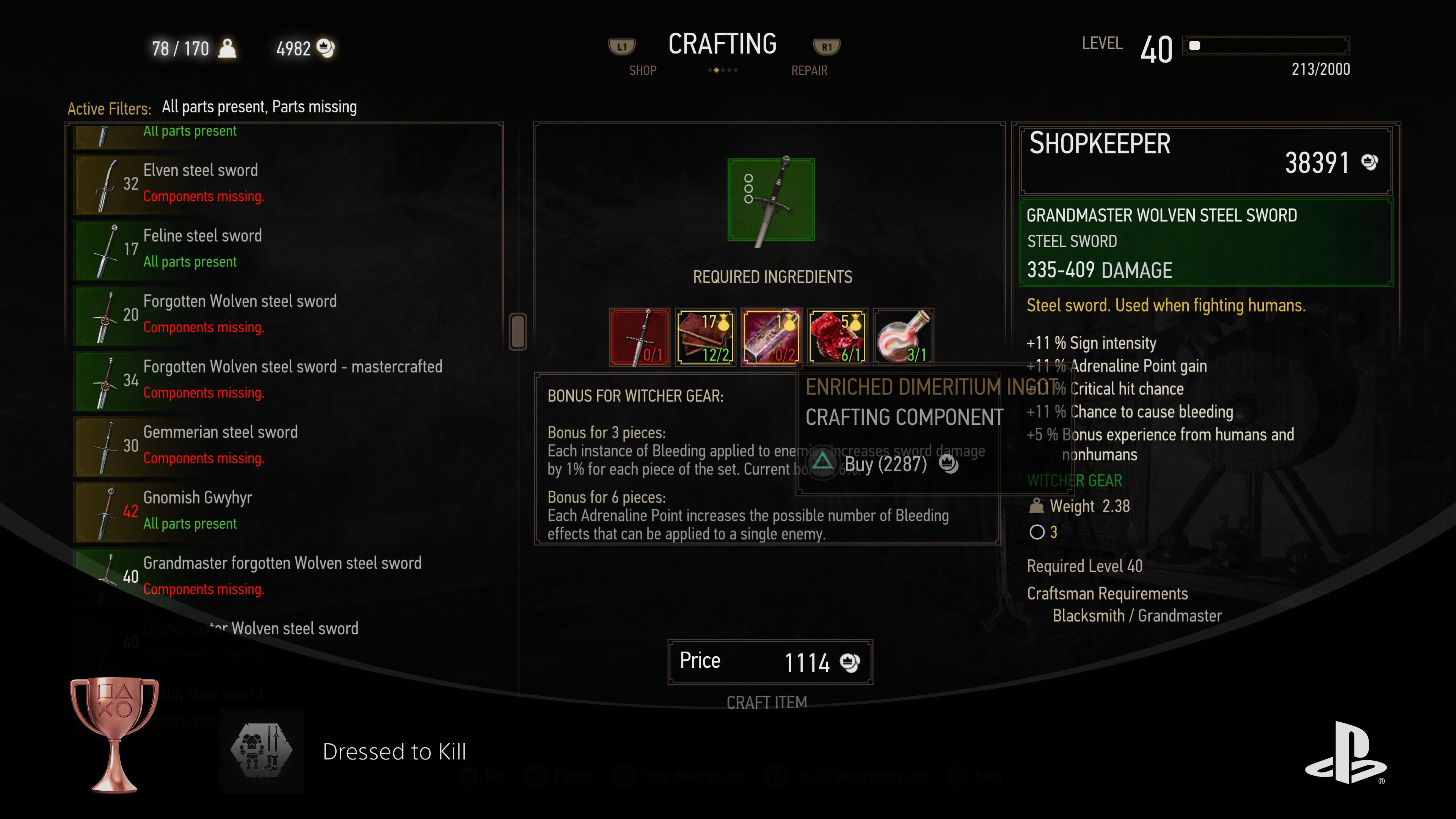
Unlike many RPGs where combat can become repetitive, The Witcher 3 continuously rewards mastery, encouraging players to experiment with different builds and strategies. Whether focusing on swordplay, unleashing devastating signs, optimizing alchemical concoctions, or enhancing Geralt’s body through mutations, every aspect of gameplay works together to create one of the most immersive and rewarding combat systems in RPG history. The blend of fast-paced action with deep RPG mechanics ensures that every encounter remains engaging from beginning to end, making The Witcher 3 a true benchmark for modern action RPGs.
World-Building and Visual Detail: A Living, Breathing Continent
One of the standout features of The Witcher 3: Wild Hunt is its exceptional world-building, which immerses players in a richly detailed and diverse fantasy world. From dense forests to treacherous mountain ranges, bustling cities to war-torn battlefields, the game’s vast open world feels alive and teeming with history, culture, and conflict. The Witcher 3 doesn’t just showcase landscapes; it weaves a story into the very fabric of the environment, making exploration a rewarding experience that constantly reveals new facets of its world.
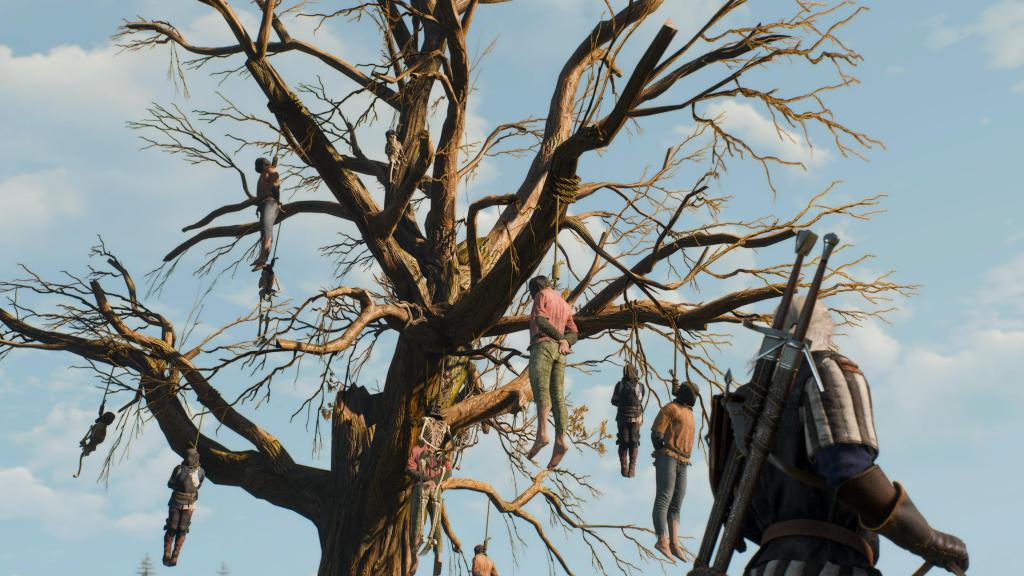
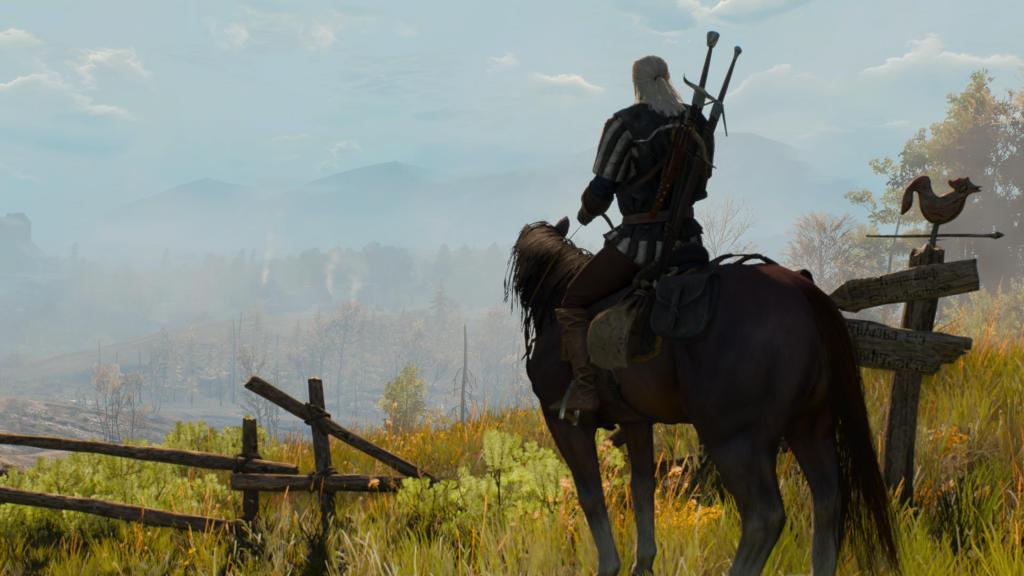
The world of The Witcher 3 is divided into several distinct regions, each with its own culture, geography, and atmosphere. Velen, the war-torn marshlands, is a place of decay, overrun with bandits, monstrous creatures, and the remnants of failed kingdoms. Novigrad, a bustling city of trade and politics, showcases the wealth of the Northern Kingdoms, but also the underbelly of crime, corruption, and religious zealotry. Skellige, a set of rugged, storm-battered islands, is home to the seafaring and fierce Skellige clans, where nature and the harsh environment define their way of life. Each of these areas feels distinct not only in terms of geography but also in terms of local lore, customs, and the impact of history on the people living there. The attention to detail in these regions is unparalleled, with every location being carefully designed to reflect its past and current struggles.
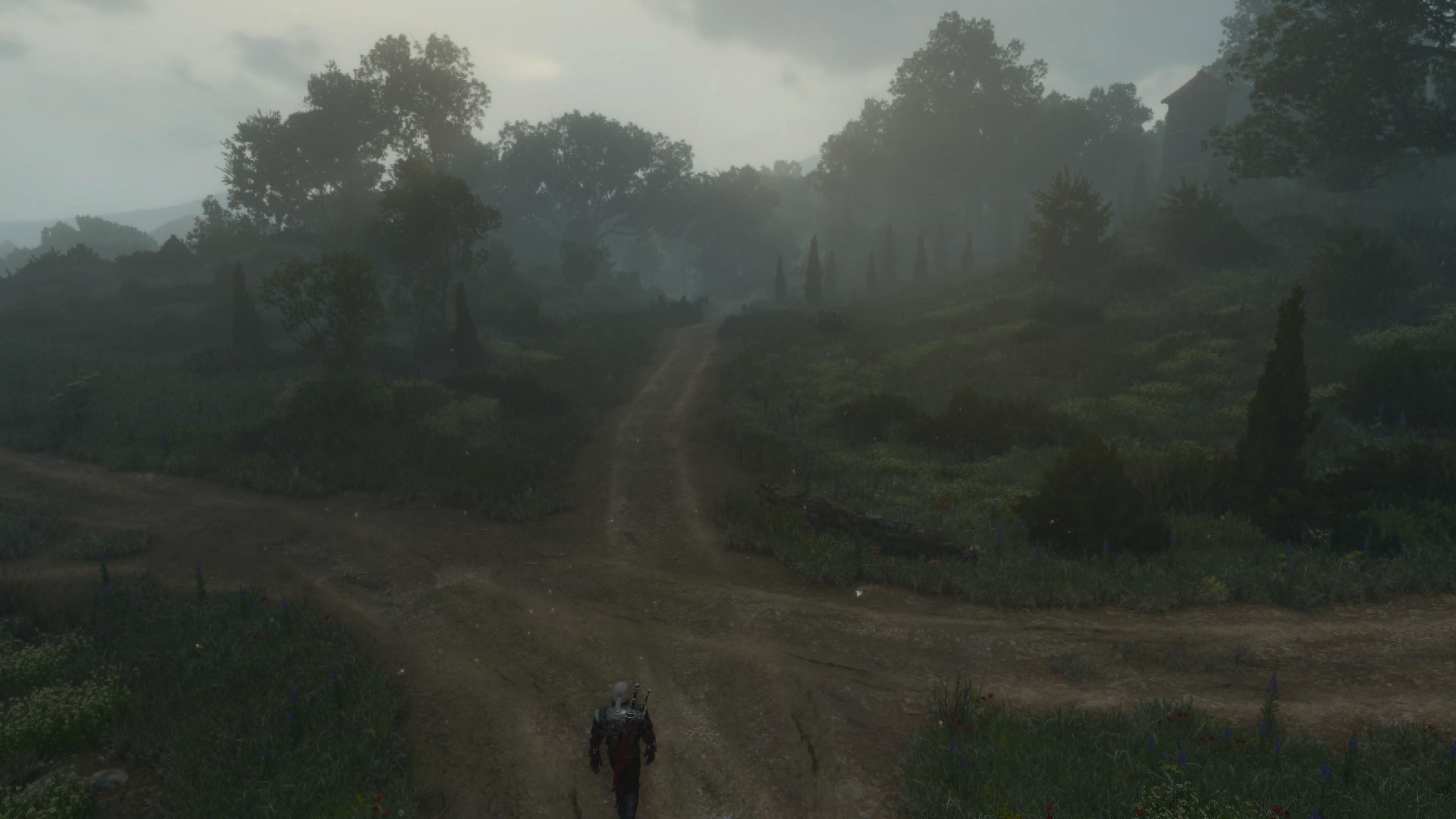
The world is not just a backdrop for Geralt’s story — it is a character in its own right. The land is filled with hidden secrets: ruins, treasure chests, hidden caves, and monster nests that offer rewarding exploration. The environment is brimming with life, from the wildlife that roam the forests and fields to the villagers who go about their daily routines. Even the smallest details — such as wildflowers swaying in the breeze, the call of birds in the distance, or the dusty trails leading through the fields — add layers to the immersion. Dynamic weather patterns, such as thunderstorms or fog rolling across the countryside, help set the mood and tone of the game, further enriching the experience.
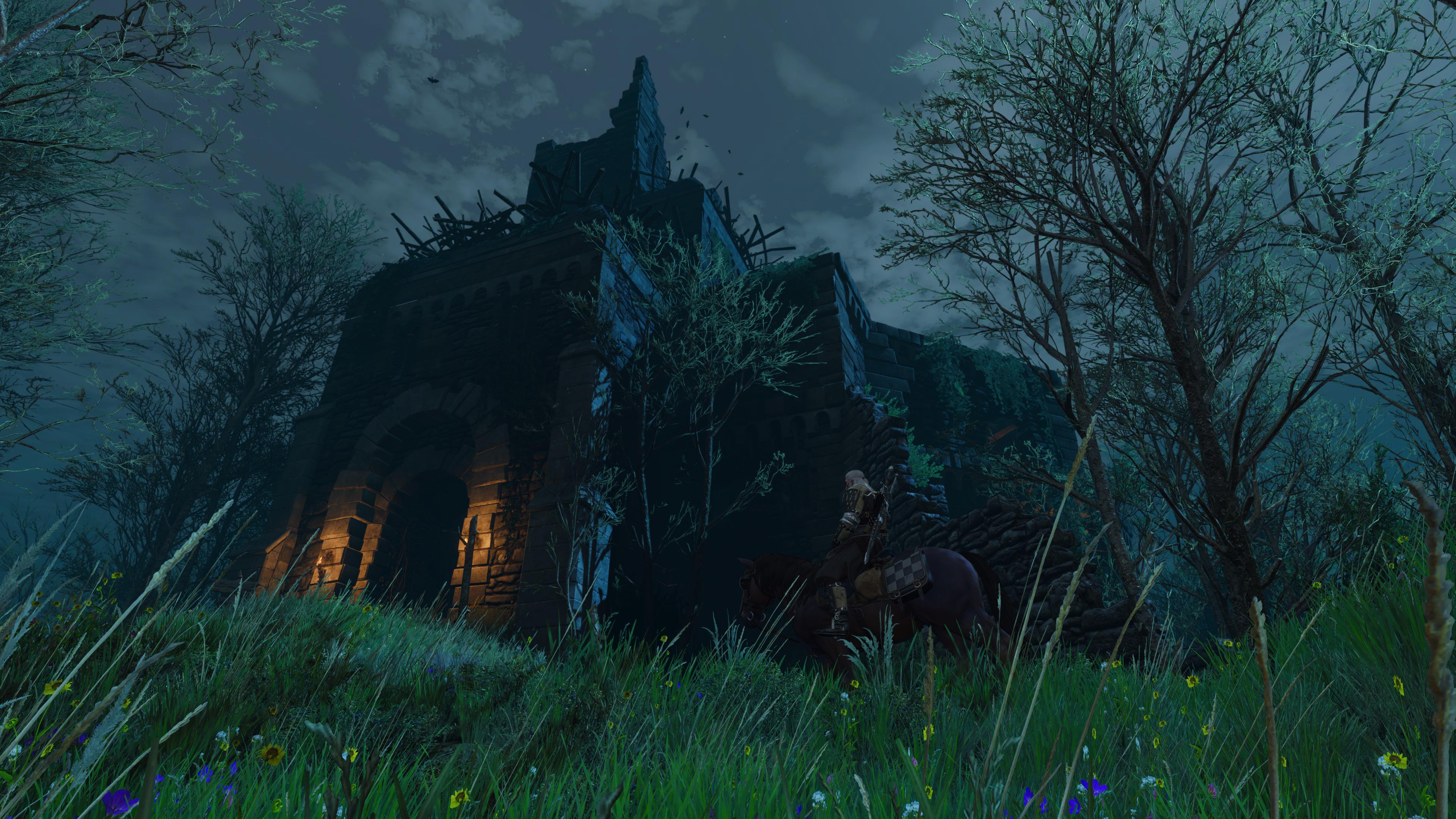
The level of visual detail in The Witcher 3 is nothing short of stunning. From realistic character models to the highly detailed environments, the game continually impresses with its level of polish. The architecture and design of each settlement, from the Gothic spires of Novigrad to the wooden huts of Velen, are all crafted with immense attention to historical and cultural accuracy. Even the textures of objects and surfaces, like the grain of wooden fences, the rust on metal gates, or the dirt underfoot, are rendered with precision, giving the world a tactile, lived-in quality.
The lighting system plays a crucial role in enhancing the visual experience. The game employs real-time lighting to bring the world to life — whether it’s the golden hues of sunrise, the dim, flickering torchlight in caves, or the sharp contrast of moonlight casting shadows across a snowy landscape, the game uses lighting to evoke emotion and draw the player into its setting. The day-night cycle, combined with dynamic weather, ensures that the world feels constantly evolving, and no two moments are ever quite the same.
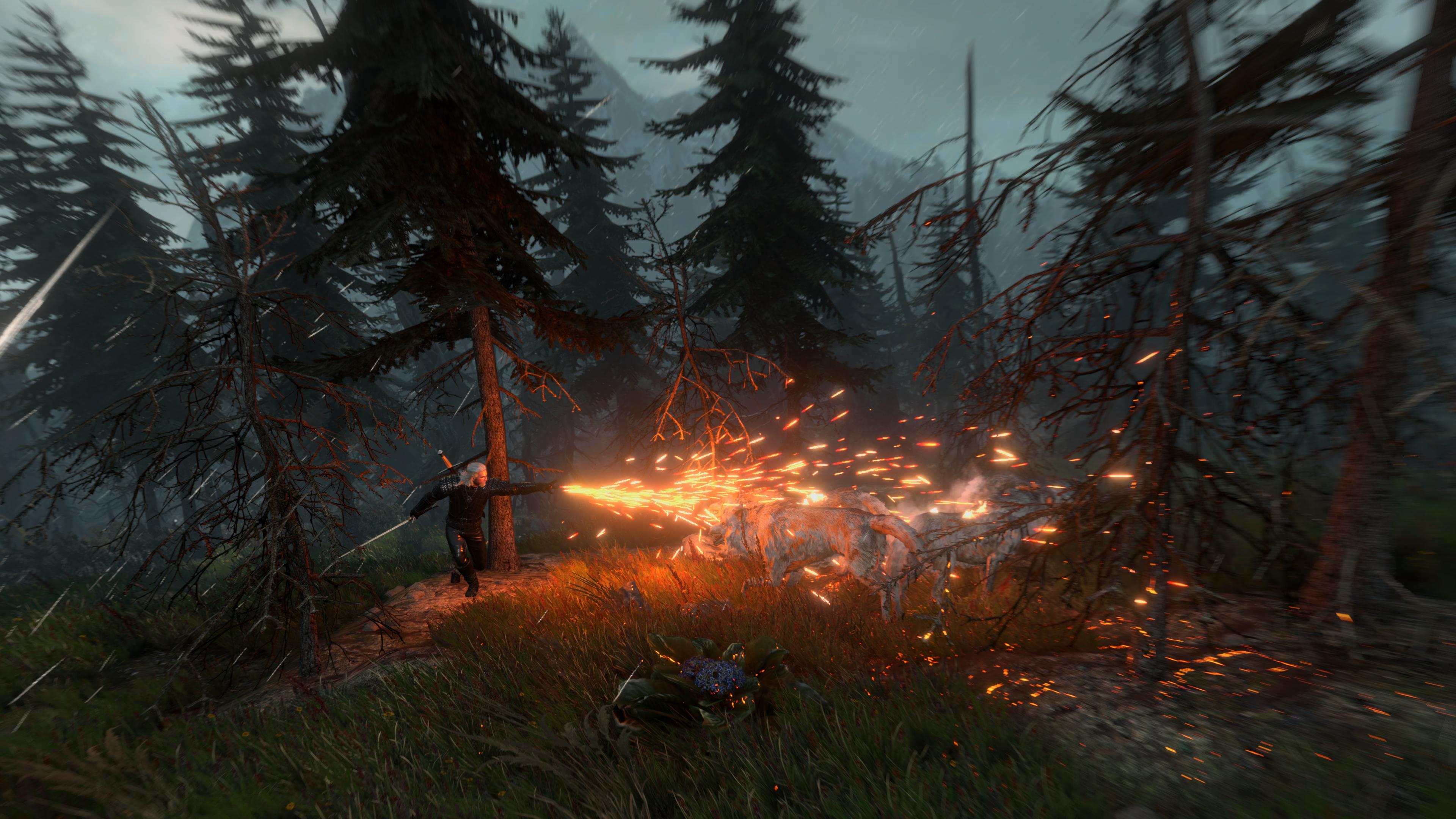
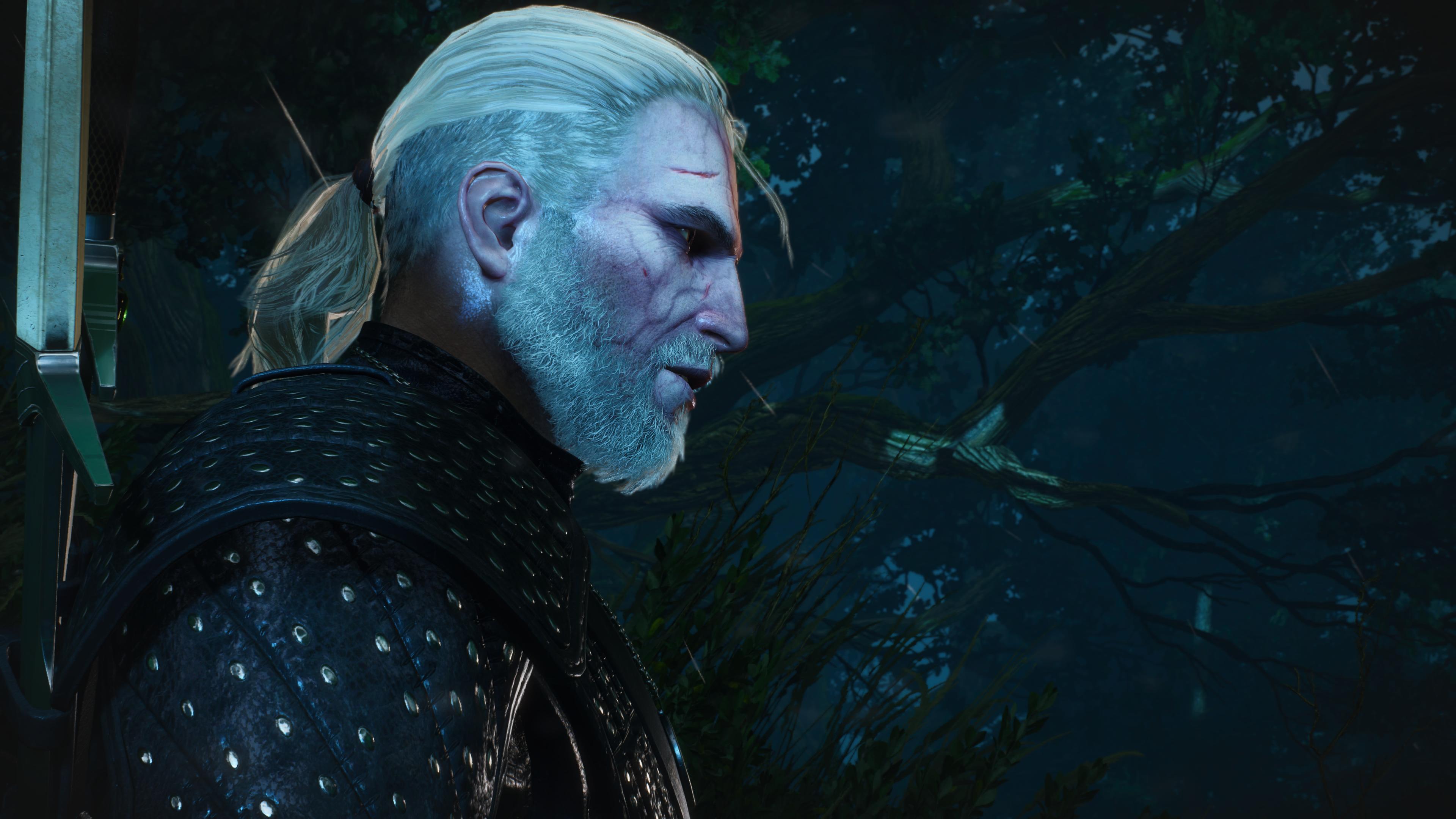
In terms of character design, Geralt and the supporting cast are rendered with incredible detail. From Geralt’s iconic white hair and scarred face to the expressions and subtle animations of other characters, The Witcher 3 pushes the boundaries of character realism in video games. The facial animations are particularly impressive, with characters displaying subtle, nuanced emotions during dialogue exchanges, adding to the feeling of a living, breathing world.
This visual excellence extends into the game’s monsters, which are intricately designed to reflect their lore and purpose. From the ghastly, skeletal Wights to the ferocious, multi-headed Leshen, each monster feels distinct in both appearance and behavior. The designers made sure that every creature not only had intricate visual detail but also a personality that could be seen in their movements and animations.
The attention to environmental storytelling also plays a huge role in world-building. Ruins, abandoned villages, and battlefields are littered with remnants of their past, telling silent stories about the tragedies, struggles, and triumphs of those who lived there. This form of visual storytelling—where the environment itself conveys emotions, histories, and narratives — sets The Witcher 3 apart from other open-world games.
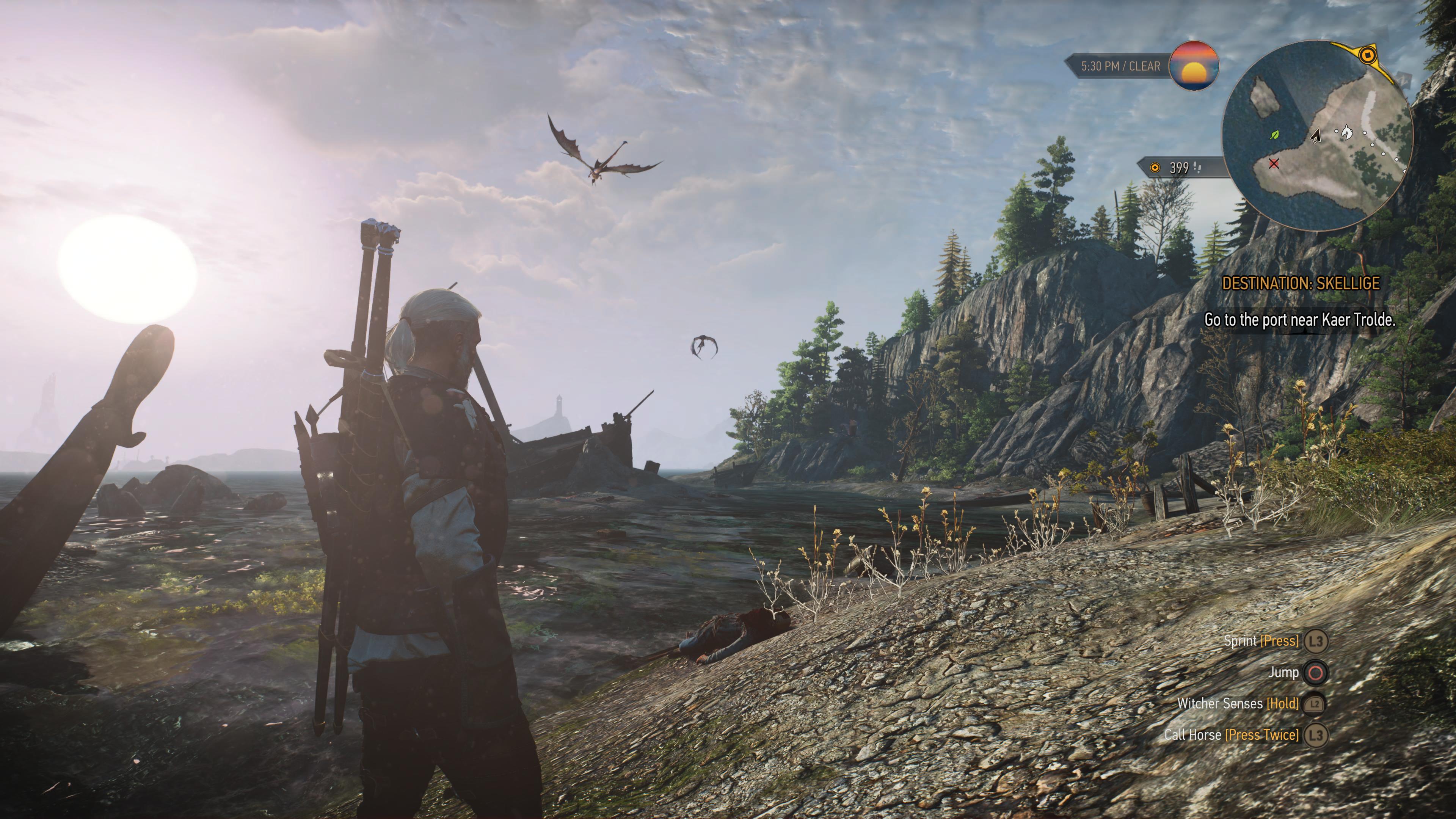
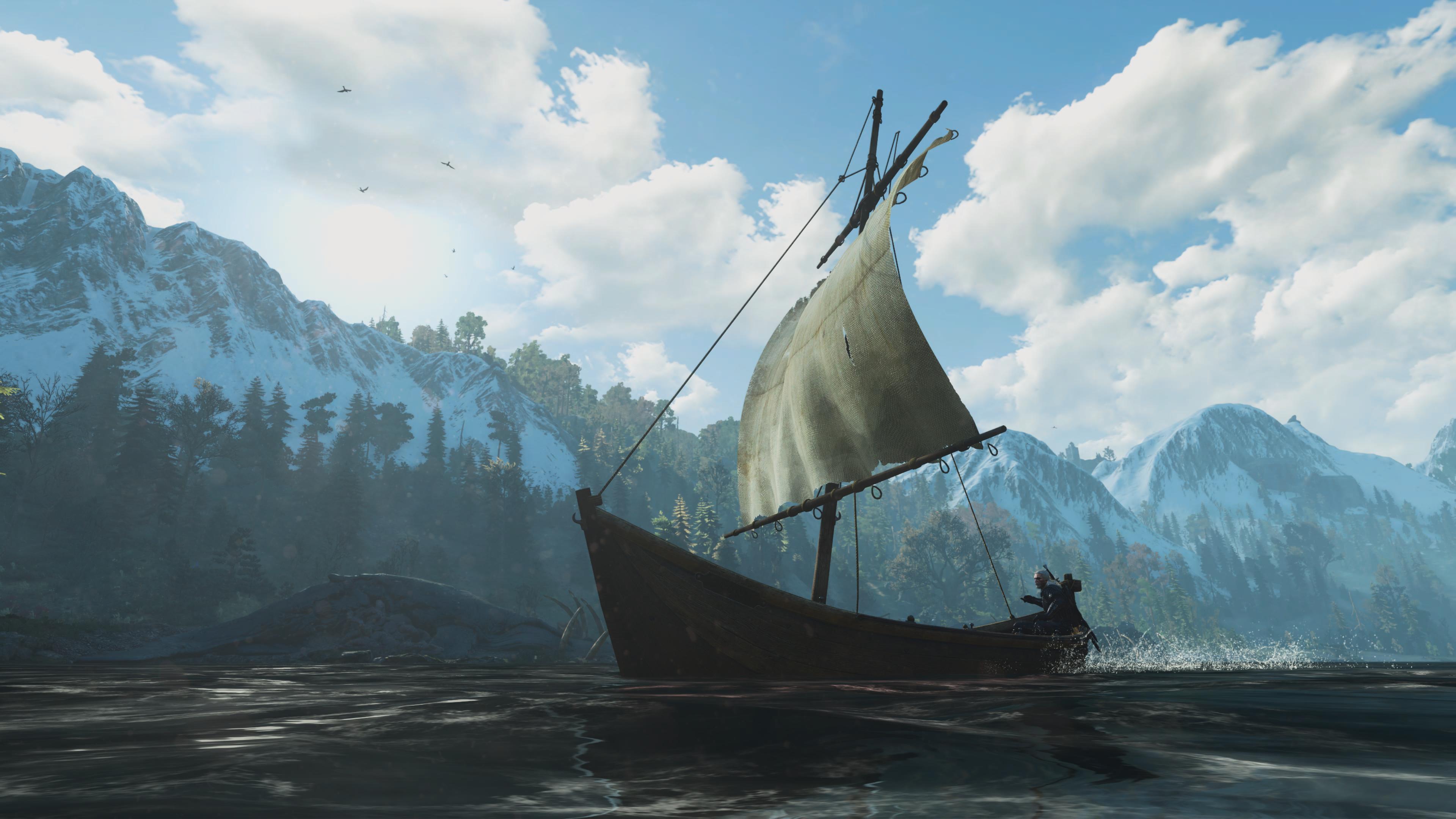
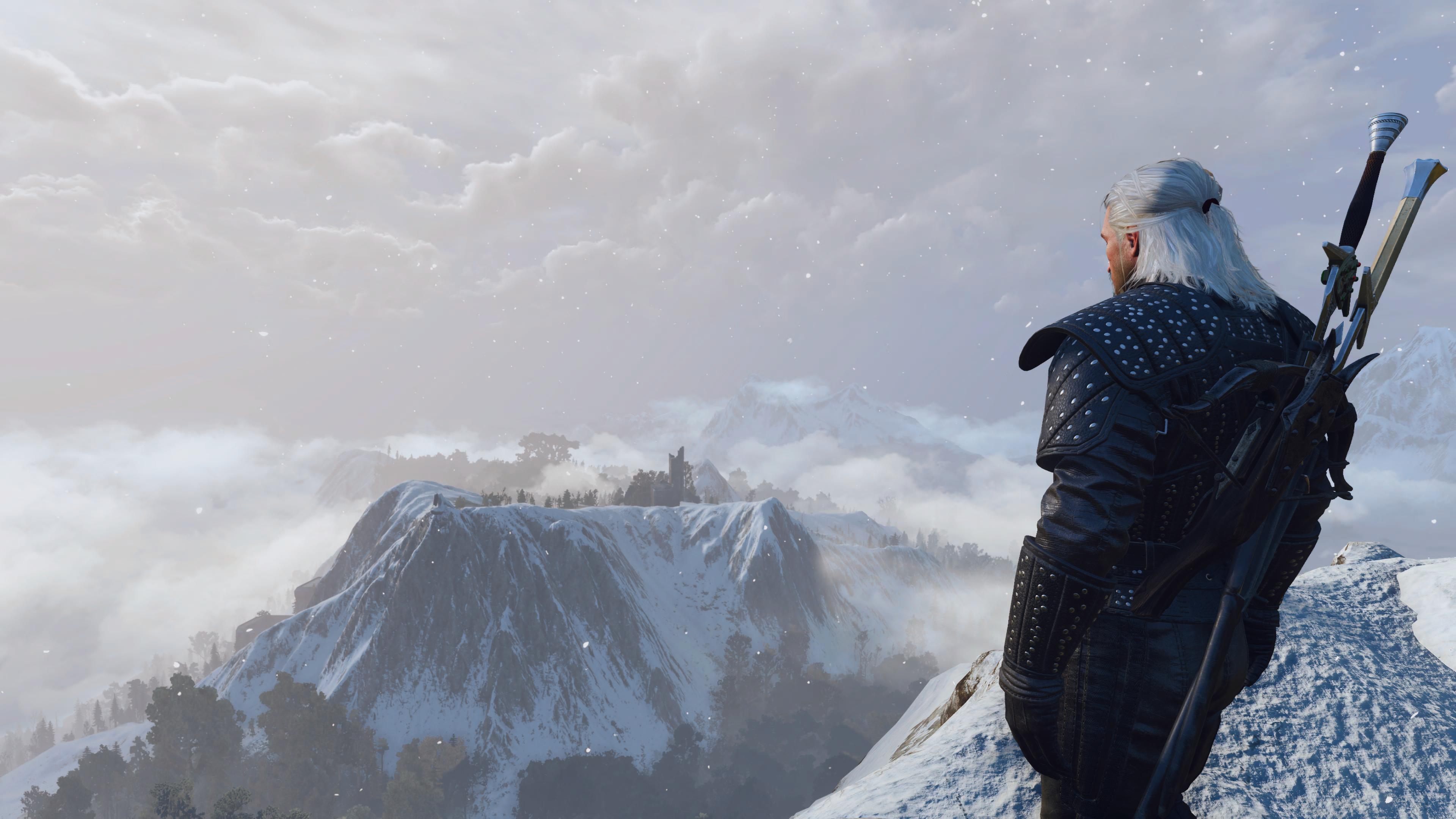
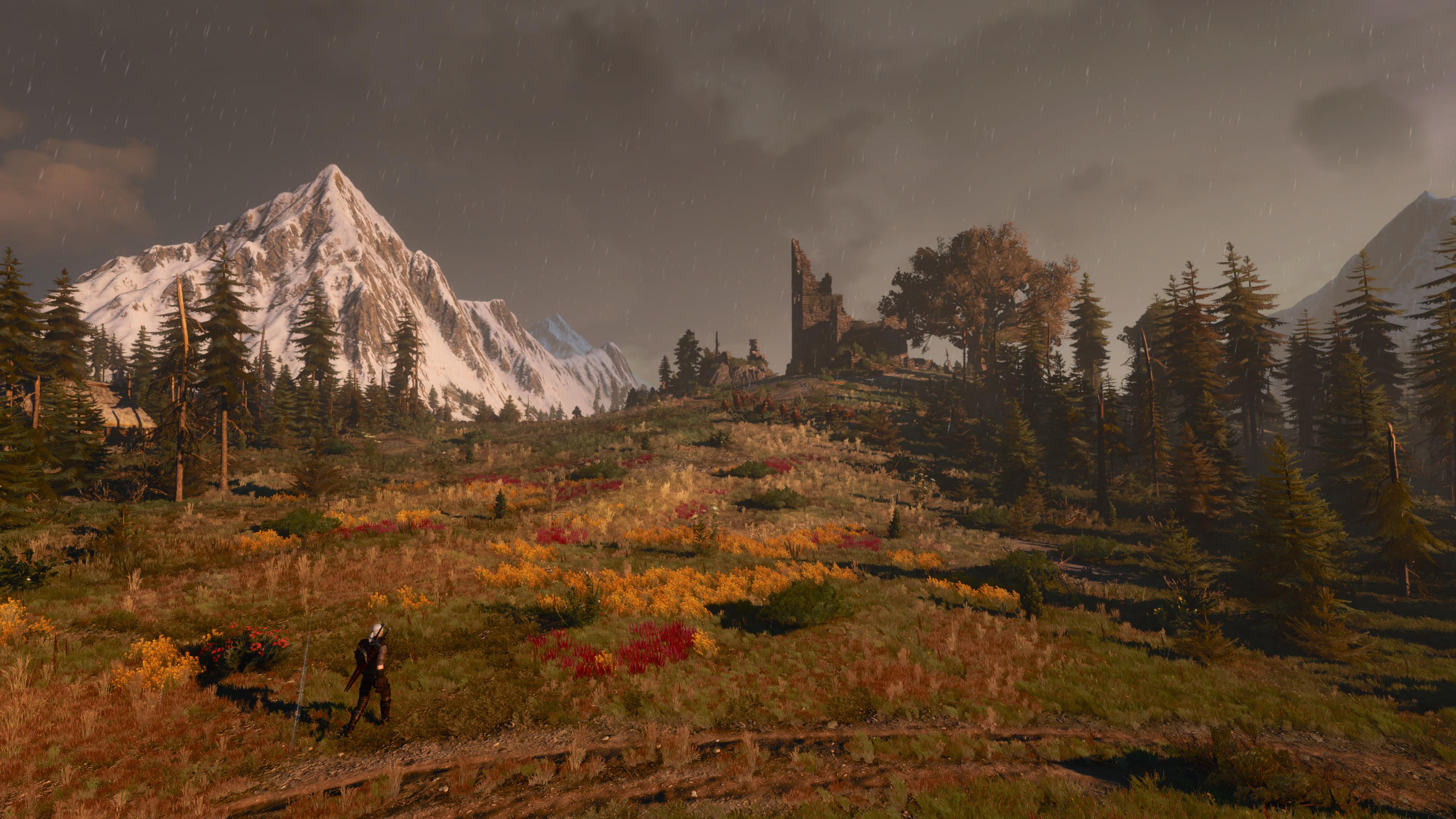
Whether wandering through the snowy hills of Skellige, encountering a hidden cave in the woods, or just taking in the view of a misty morning in Velen, the world of The Witcher 3 feels breathtaking and real. Its blend of lush, beautiful environments and harsh, unforgiving terrain tells a story of both beauty and struggle. The attention to detail and the vastness of the world create an environment that is not only expansive but rich in history, culture, and emotional resonance. This world feels like it has existed for centuries, with each corner offering something new to discover — be it a lost ruin, a monster to slay, or a tale to unravel. In this way, The Witcher 3 achieves a level of world-building that is rarely seen in modern RPGs, providing players with an immersive experience that draws them into its world and makes them feel like a true part of it.
Expansions: Adding Depth to an Already Rich World
While The Witcher 3: Wild Hunt already offers an incredible amount of content, CD Projekt Red went beyond expectations with two full-fledged expansions: Hearts of Stone and Blood and Wine. These are not mere DLCs but full narrative experiences that rival standalone games in depth and quality.
Hearts of Stone: A Dark and Twisted Fairy Tale
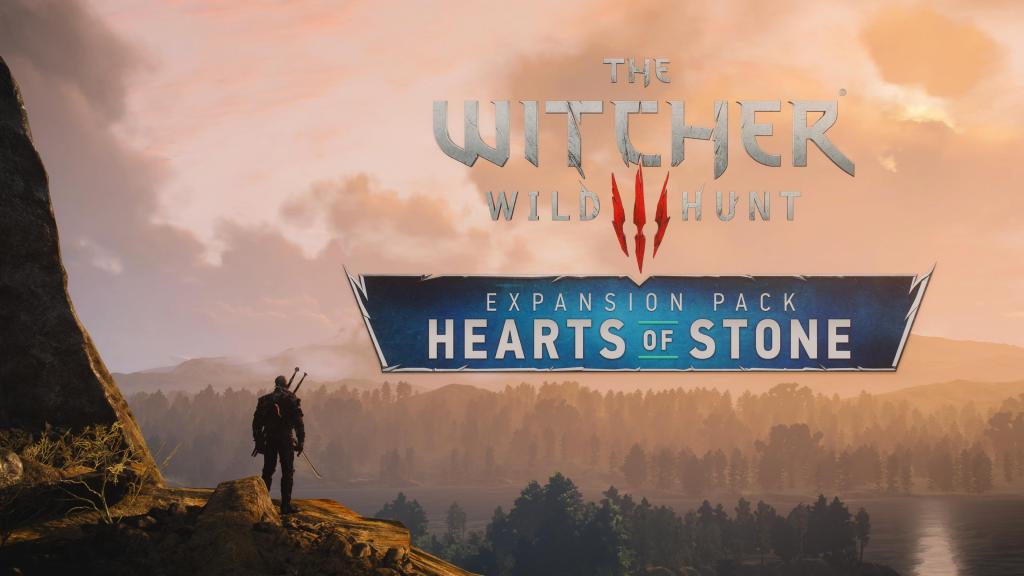
The first expansion, Hearts of Stone, introduces players to one of the most enigmatic, terrifying, and brilliantly written antagonists in gaming history: Gaunter O’Dimm, also known as the Master of Mirrors or the Man of Glass. The expansion’s story revolves around a Faustian pact, exploring themes of power, greed, love, and the nature of true evil.
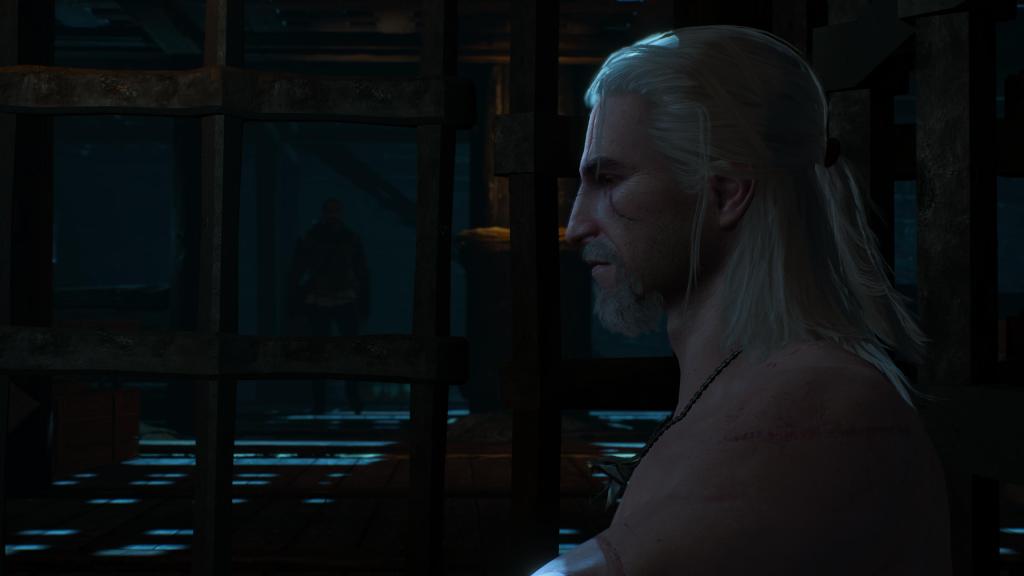
The narrative begins with Geralt being tricked into servitude by O’Dimm after being captured by the Ofieri and left for dead. O’Dimm saves Geralt’s life in exchange for an unspecified future debt. This sets the stage for the main conflict: Geralt is tasked with fulfilling three seemingly impossible wishes for Olgierd von Everec, a once-proud nobleman who gained immortality at a terrible price. The further Geralt investigates Olgierd’s past, the more he uncovers the true horror of O’Dimm’s influence.
Gaunter O’Dimm: A Villain of Mythic Proportions
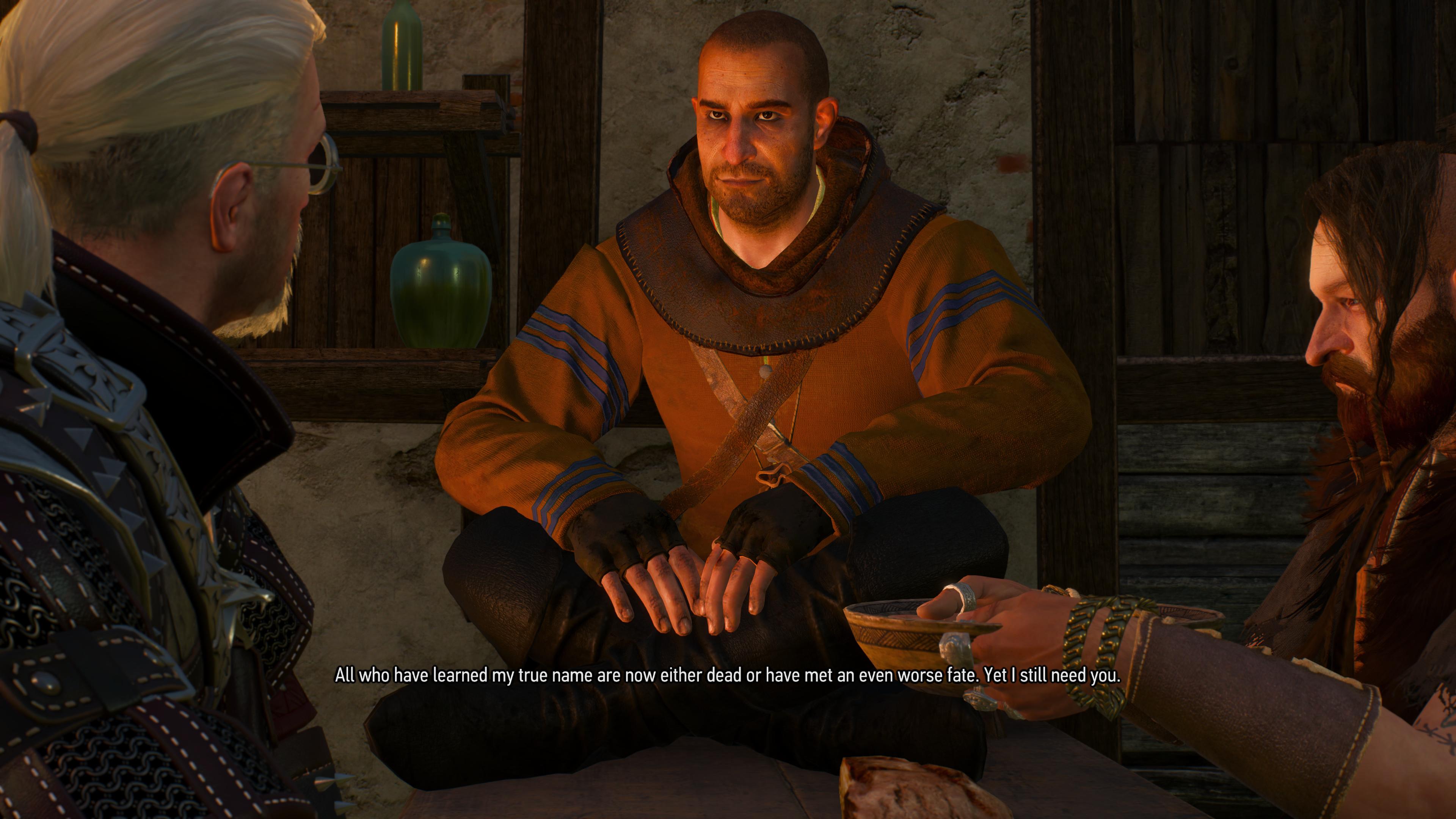
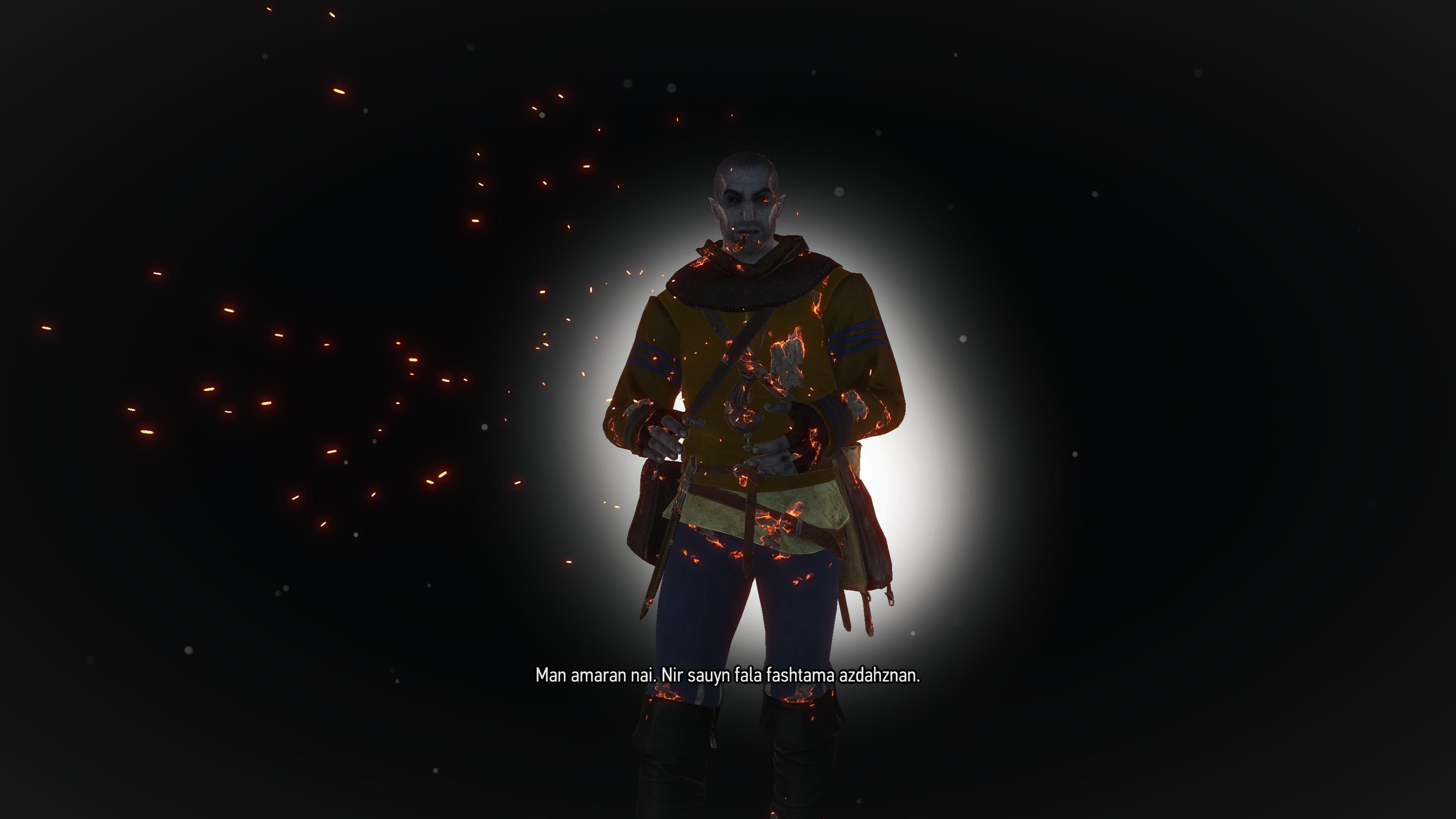
Gaunter O’Dimm is, without a doubt, one of the most chilling and enigmatic villains in video game history. Unlike traditional villains who use brute force or armies to achieve their goals, O’Dimm is a being of pure malevolence, thriving on manipulation, deception, and contracts. He does not force anyone to sign deals with him; rather, he offers tempting bargains that seem beneficial at first but always come with devastating consequences.
One of the most terrifying aspects of O’Dimm is that he is not a typical demon or sorcerer, but something much older and far more powerful. He does not follow the rules of men, gods, or any known magical force. His origins remain unknown, but throughout The Witcher 3, there are hints that he may be a devil-like entity that has existed since the dawn of time, feeding on the souls of those foolish enough to bargain with him.
O’Dimm is first introduced in the base game during a brief encounter in White Orchard, where he appears as a simple, friendly merchant offering Geralt advice about Yennefer’s whereabouts. This unassuming introduction makes his later reveal all the more unsettling. His true nature becomes evident during Hearts of Stone, where it is revealed that he grants wishes, but always with an insidious twist. Those who make deals with him usually find that their greatest desires lead to their ruin.
The Power and Presence of Gaunter O’Dimm
What makes O’Dimm so terrifying is that he does not operate within the laws of reality. He can stop time with a mere gesture, he appears wherever and whenever he pleases, and he always seems to know more than he should. His presence is subtly terrifying — he never raises his voice, never acts out of anger, and never seems flustered. He exudes absolute control, and his polite demeanor only makes him more unsettling.
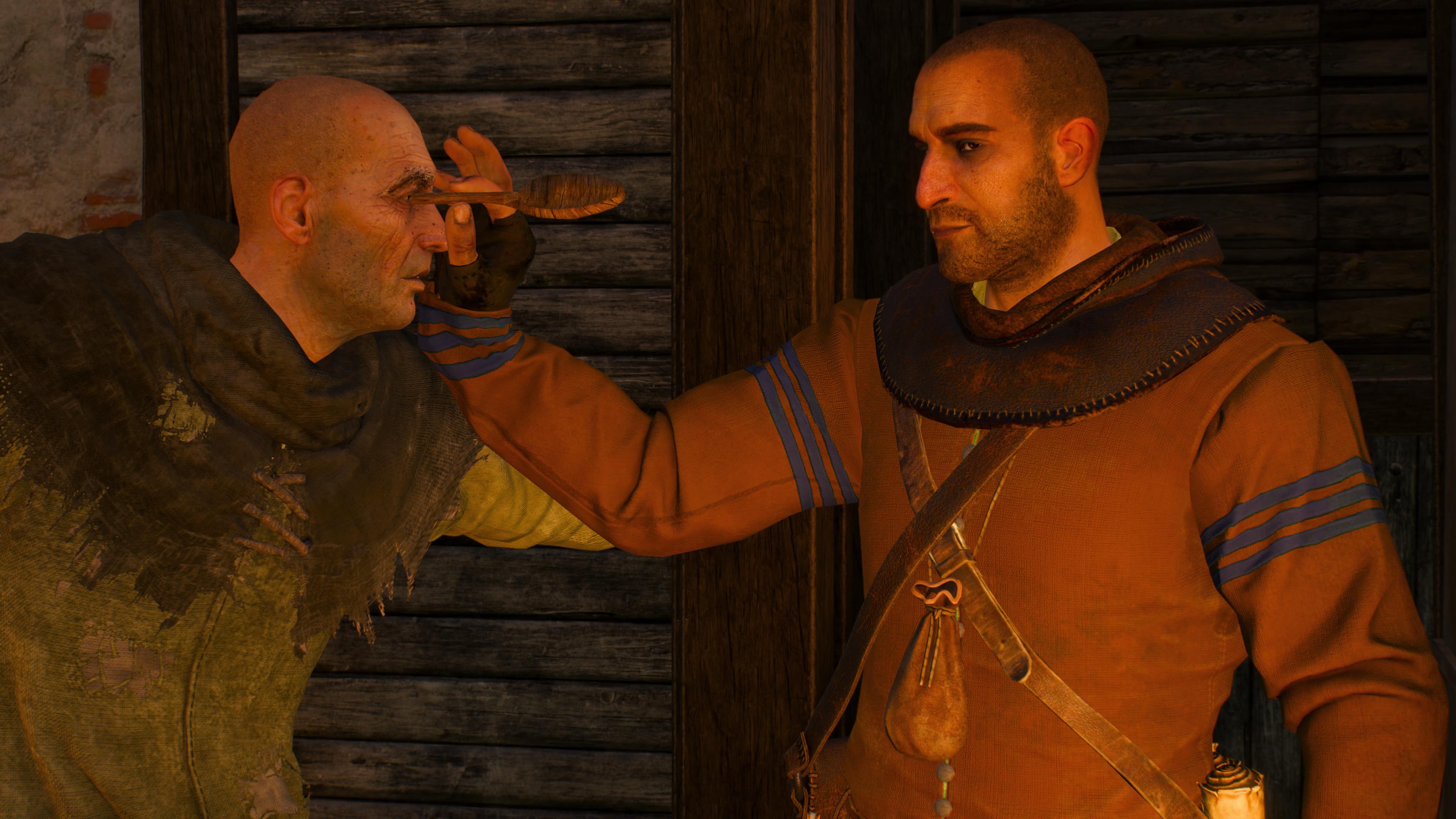
His power is demonstrated in one of the most chilling scenes in the game. During the wedding sequence, if Geralt speaks to him, O’Dimm casually freezes time mid-sentence, leaving everyone but Geralt motionless. He then carves a spoon into the wooden table and explains that it now belongs to him, in both a literal and existential sense. This moment serves as a warning: O’Dimm’s power is not bound by the rules of men or magic. He can erase people from existence, bend reality, and control fate itself.
One of the expansion’s most haunting moments is when Geralt asks Shani about O’Dimm’s name, only for her to react with confusion. Despite speaking with him just moments earlier, she has no recollection of him. This subtle but horrifying detail implies that O’Dimm has the ability to manipulate memories and perception, further reinforcing the idea that he is a being beyond human comprehension.
Olgierd von Everec: A Cautionary Tale
At the heart of Hearts of Stone is the tragic figure of Olgierd von Everec, a nobleman who, in his desperation to save his dying wife, made a deal with Gaunter O’Dimm. In exchange for power and immortality, Olgierd unwittingly lost his humanity and the love of his life. His story is a cautionary tale about the price of unchecked ambition.
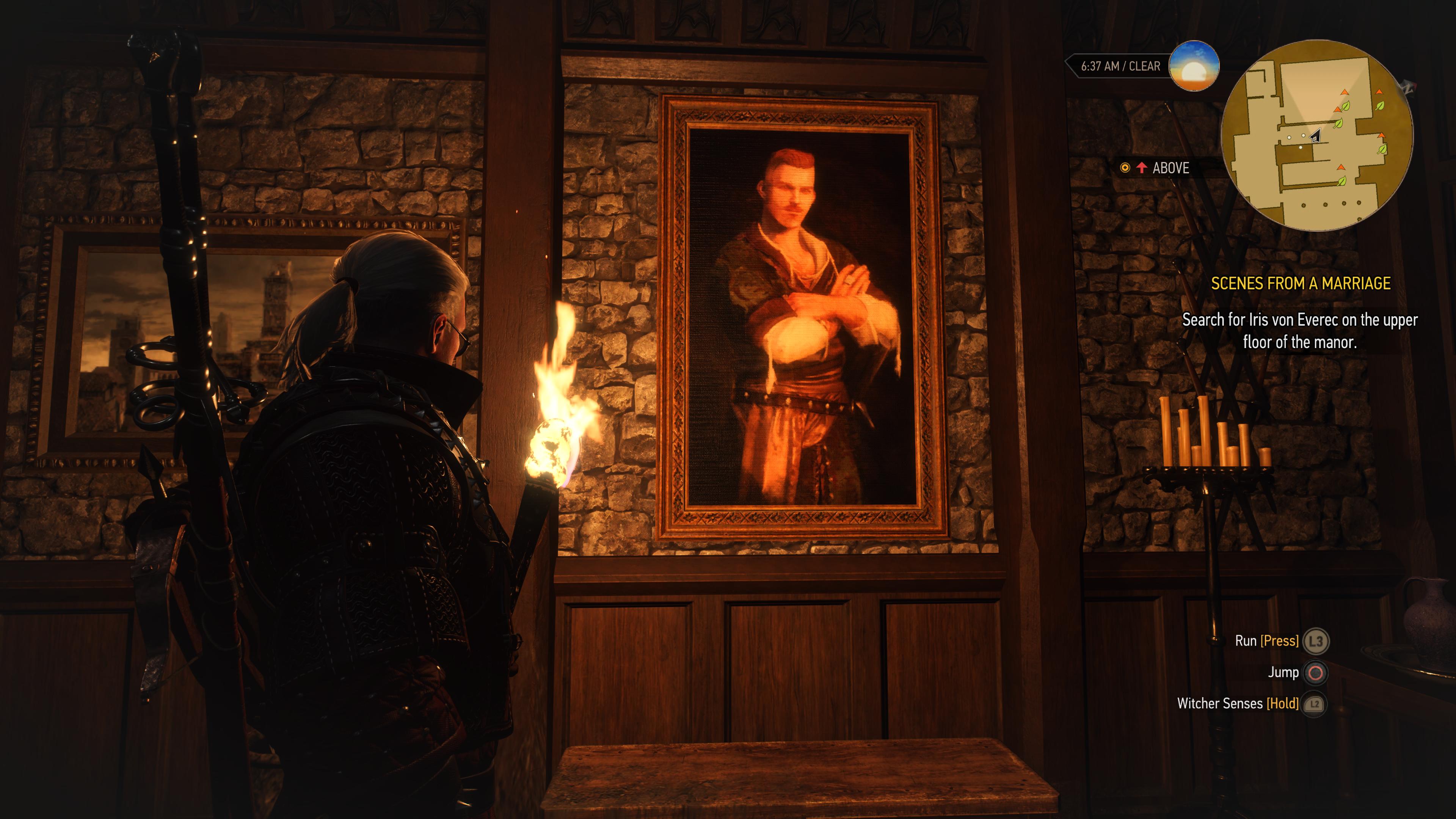
Throughout the expansion, Geralt is forced to complete three tasks that seem impossible but are ultimately achievable through clever means. These tasks reveal more about Olgierd’s past and the way O’Dimm twisted his wishes. By the time Geralt completes the final task, the truth about Olgierd’s bargain comes to light, and the player is faced with a choice:
• Allow Gaunter O’Dimm to claim Olgierd’s soul, fulfilling their contract
• Intervene and challenge O’Dimm to a game of wits
If Geralt does nothing, O’Dimm mercilessly rips Olgierd’s soul from his body, leaving behind nothing but a lifeless husk. However, if the player chooses to outwit O’Dimm, they must solve a riddle before he claims Geralt’s soul as well.
The Final Confrontation: Outwitting the Devil
Unlike traditional boss fights, the final encounter with Gaunter O’Dimm is a battle of intelligence rather than combat. Geralt must solve a riddle within a limited time, navigating a surreal nightmare world created by O’Dimm himself. If the player succeeds, O’Dimm is banished, screaming in frustration for the first and only time in the game—one of the few indications that he is not infallible.
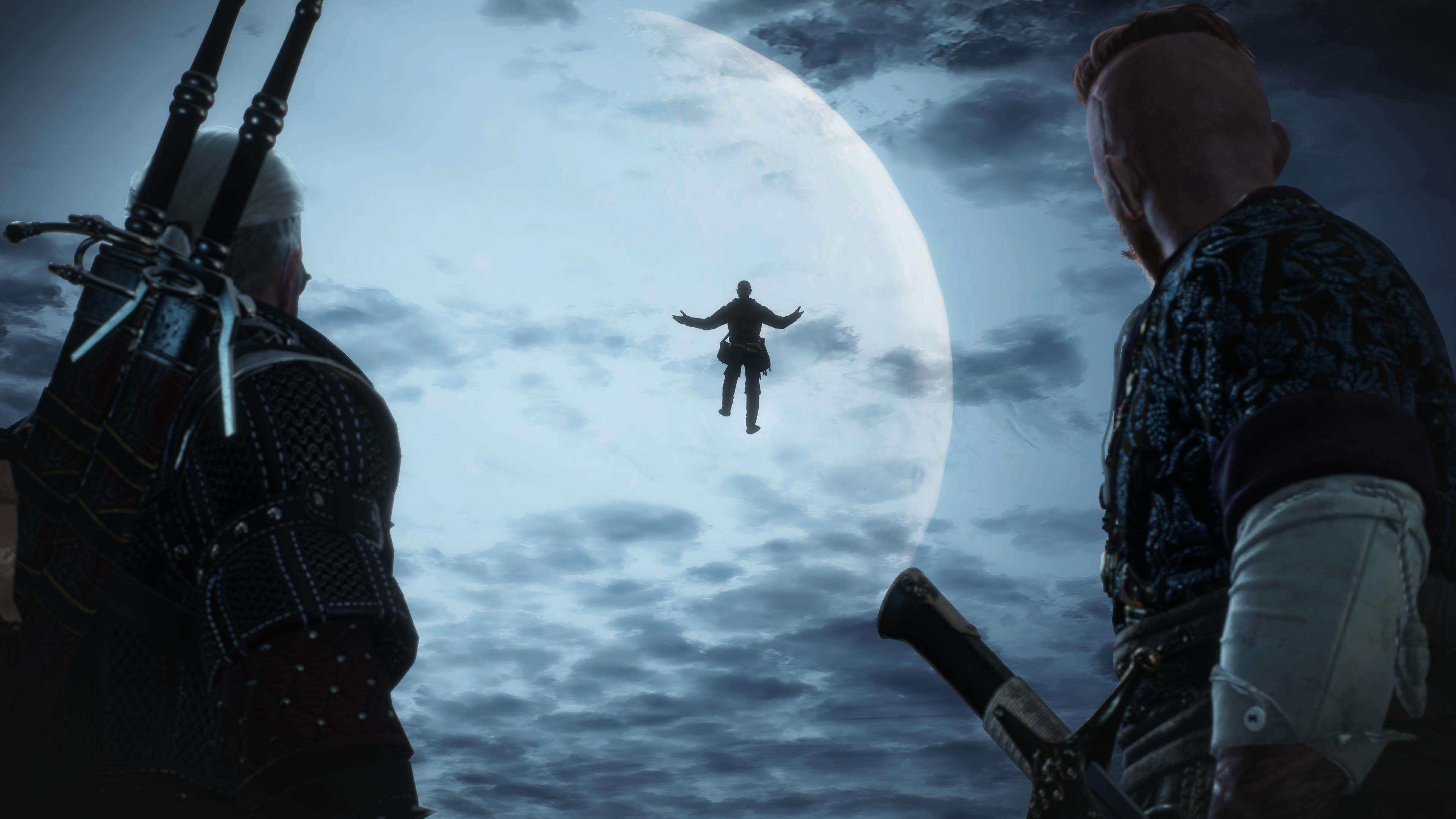

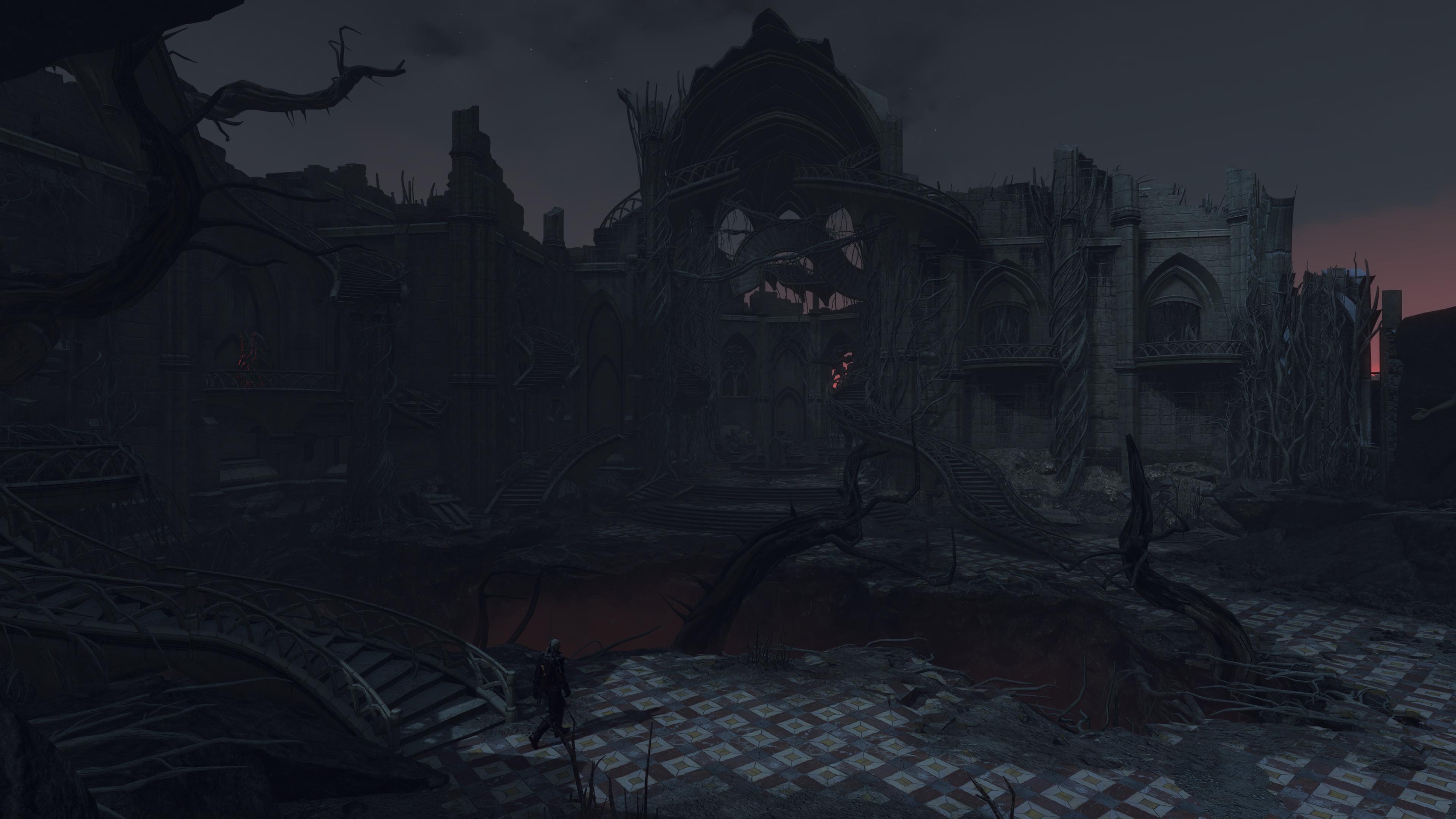

If Geralt loses, O’Dimm claims his soul, and the screen fades to black, signaling one of the only true „Game Over” endings in The Witcher 3. This further reinforces his absolute control over reality.
Thematic Depth: The Nature of Evil
One of the most compelling aspects of O’Dimm is that he is not a traditional villain with a clear agenda. He is not seeking world domination, revenge, or chaos. Instead, he is a being that thrives on the suffering of others, offering people their deepest desires only to watch them destroy themselves in pursuit of happiness. He embodies the idea that true evil is not loud and aggressive, but quiet, patient, and methodical.
O’Dimm’s influence extends beyond the events of Hearts of Stone, leaving players with an unsettling question: How many others have fallen into his trap? Given his apparent omnipotence, it is entirely possible that his reach extends far beyond what Geralt has witnessed. This ambiguity makes him one of the most haunting villains in gaming history.
Final Thoughts on Hearts of Stone
Hearts of Stone is a masterclass in storytelling, weaving a tale that feels intimate yet deeply disturbing. It transforms The Witcher 3 into a psychological horror story, where the real monsters are not the beasts Geralt hunts but the choices that define people’s fates. The expansion’s main antagonist, Gaunter O’Dimm, elevates the narrative to mythic proportions, ensuring that his presence lingers in the minds of players long after the credits roll.
For those who love dark fairy tales, psychological horror, and morally complex storytelling, Hearts of Stone is an absolute must-play. It proves that the greatest threats do not always come from swords or sorcery, but from whispers in the dark and deals signed in desperation.
Blood and Wine: A Beautiful Yet Deadly Farewell
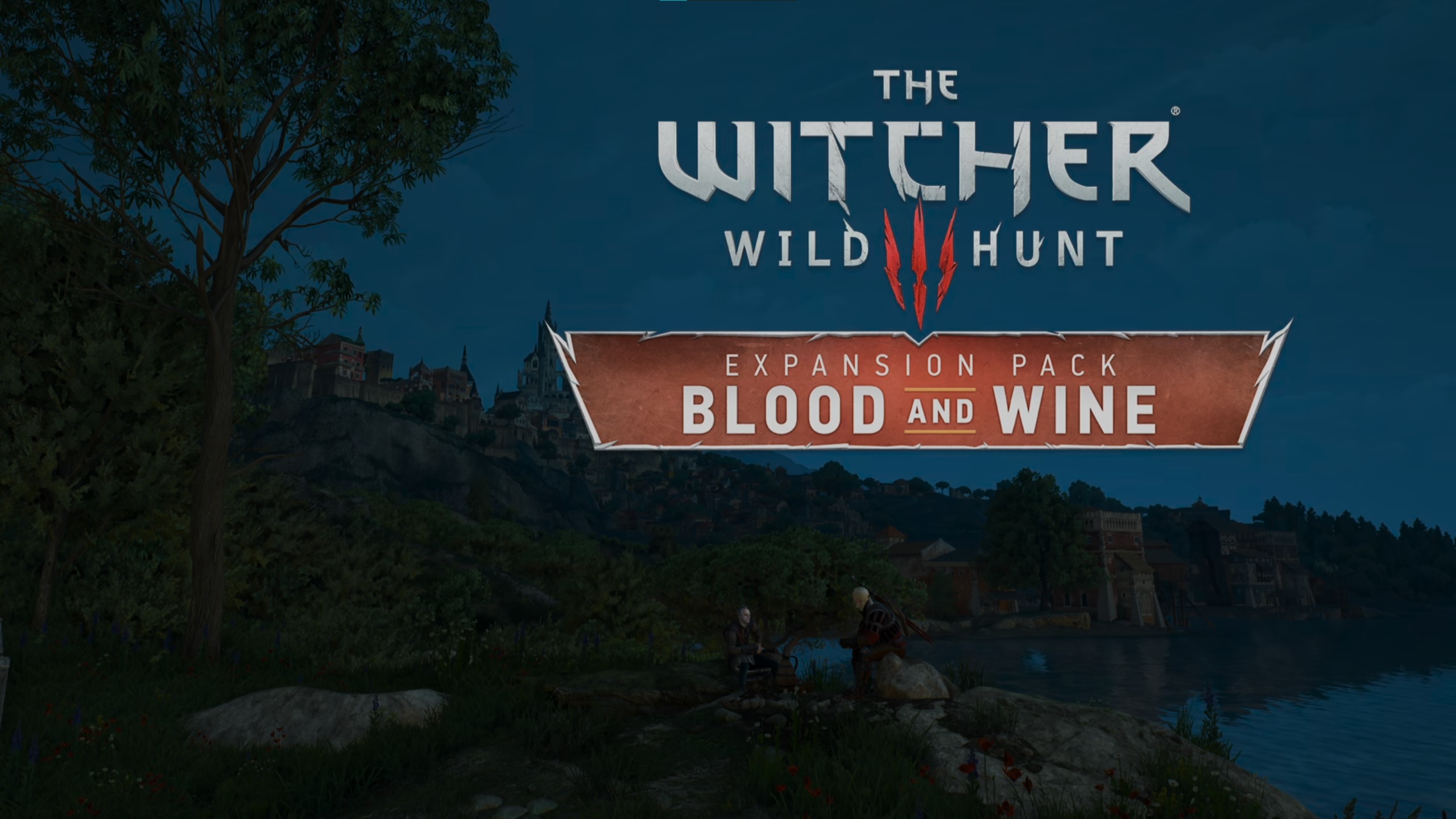
Blood and Wine is not just an expansion; it is a full-fledged epilogue to Geralt of Rivia’s story, offering a deeply emotional and thematically rich conclusion to his adventures. Set in the stunning duchy of Toussaint, the expansion introduces players to a land of chivalry, romance, and vibrant beauty, but beneath the picturesque landscapes and courtly traditions lies a dark and brutal conspiracy that threatens to consume the region.
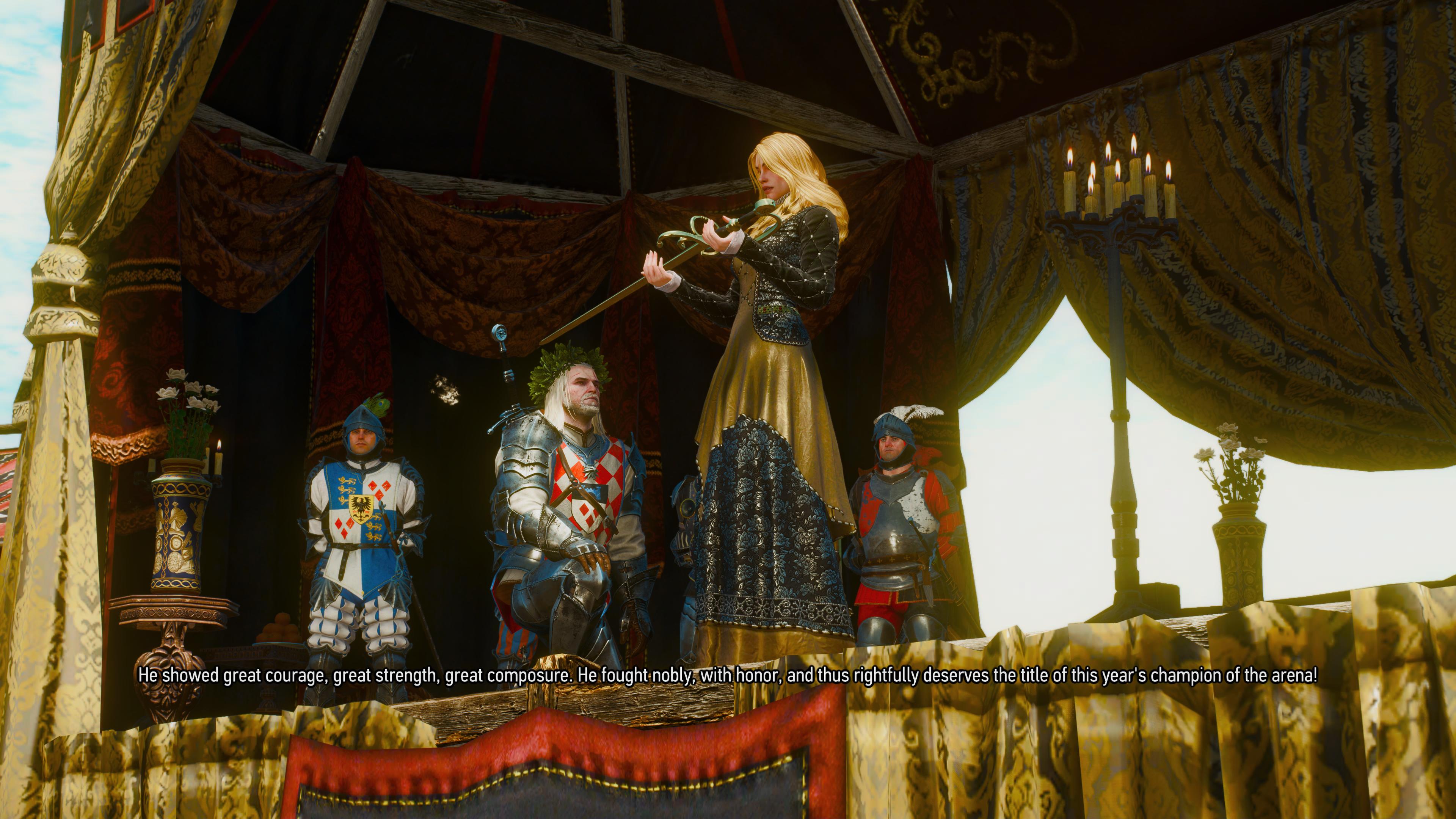
The expansion explores themes of knighthood, honor, redemption, and the nature of monstrosity, providing some of the most memorable quests, characters, and moral dilemmas in The Witcher 3. At the heart of the story is Dettlaff van der Eretein, a powerful higher vampire, and his complex, tragic relationship with Duchess Anna Henrietta and her estranged sister, Syanna. The narrative is layered, unpredictable, and deeply emotional, culminating in a finale that forces players to make some of the most difficult choices in the entire series.
The Setting: Toussaint – A Fairy Tale Kingdom with a Dark Heart
Toussaint is a stark contrast to the war-torn landscapes of Velen, Novigrad, and Skellige. Inspired by French and Mediterranean culture, the duchy is a land of rolling vineyards, extravagant palaces, and an unshakable belief in the ideals of knighthood. Unlike the grim and cynical world of the Northern Kingdoms, the people of Toussaint live by a strict code of chivalry, and knights are revered as the embodiment of honor and virtue.
However, as Geralt soon discovers, beneath the surface of this utopian society lies corruption, hypocrisy, and an unwillingness to acknowledge hard truths. The knights of Toussaint may be brave and noble, but they are also blind to the flaws in their world, and their strict adherence to tradition often leads to tragedy rather than justice.
This contrast between idealism and harsh reality forms the thematic core of Blood and Wine, as Geralt must unravel a conspiracy that shatters the fairy tale illusion of Toussaint.
The Beast of Beauclair: A Murder Mystery Rooted in Tragedy
The main story begins with a series of gruesome murders that have shaken the duchy. Geralt is summoned by Duchess Anna Henrietta, the ruler of Toussaint, to track down the killer, known only as The Beast of Beauclair. What begins as a simple monster hunt quickly spirals into a complex web of betrayal, revenge, and impossible choices.
The Beast is eventually revealed to be Dettlaff van der Eretein, a higher vampire with terrifying power. However, unlike most of Geralt’s adversaries, Dettlaff is not an outright villain. He is a deeply conflicted, tragic figure who genuinely loves Syanna, the woman who manipulated him into carrying out the murders. His actions are not driven by malice but by a profound sense of betrayal and heartbreak.
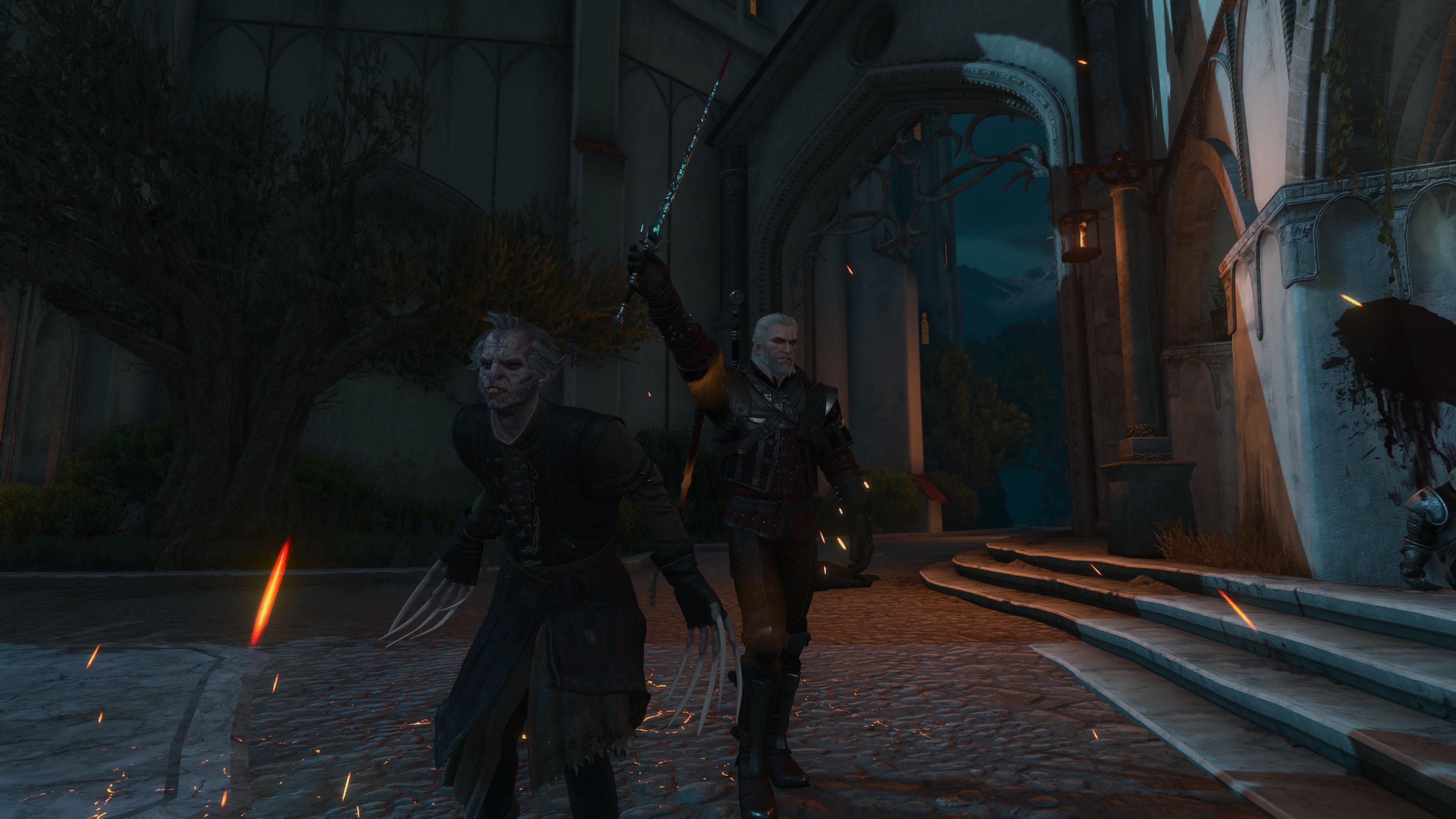
This revelation forces Geralt into a moral dilemma unlike any other in the game. Is Dettlaff a monster who must be put down, or is he a victim of circumstances, manipulated into violence by those he trusted most?
Dettlaff van der Eretein: The Tragic Anti-Villain
Dettlaff van der Eretein is one of the most nuanced and complex characters in The Witcher 3. As a higher vampire, he is not bound by the same instincts as lesser creatures. He does not kill for pleasure or sustenance — he is an immortal being capable of love, sorrow, and moral contemplation.
Unlike the majority of vampires Geralt encounters, Dettlaff is not inherently malevolent. In fact, he is arguably one of the most emotionally vulnerable characters in the entire game. When players first meet him, he is reserved, intelligent, and honorable, showing clear distress over the actions he has been forced to commit. However, as the story progresses, it becomes evident that his sense of love and loyalty has made him dangerously unstable.
Dettlaff’s greatest flaw is that he loves too deeply and trusts too easily. His love for Syanna is absolute, and when he discovers that she manipulated him into murdering for her own revenge, he completely loses control, unleashing his full, terrifying power upon Toussaint.
One of the most haunting aspects of Dettlaff is that, despite his monstrous abilities, he does not see himself as a villain. He is a creature who values honor and loyalty, but once that trust is broken, his wrath is unstoppable and devastating.

The final confrontation with Dettlaff is one of the most intense and emotionally charged battles in The Witcher 3. Depending on the player’s choices, Geralt may either:
• Fight Dettlaff to the death, ending his rampage but reinforcing the idea that humans and vampires can never coexist.
• Allow Dettlaff to leave, acknowledging that he was manipulated and that vengeance will not bring peace.
Regardless of the outcome, Dettlaff’s story is a heartbreaking exploration of love, betrayal, and the nature of monstrosity.
Syanna: The Heart of the Tragedy
While Dettlaff is the Beast of Beauclair, the true mastermind behind the story is Syanna, the estranged sister of Duchess Anna Henrietta. As a child, Syanna was exiled from the palace due to an old prophecy that foretold she would bring doom to Toussaint. Bitter and alone, she grew up with hatred in her heart, swearing revenge on those who abandoned her.
Her motivations are both understandable and horrifying. She was a victim of unjust fate, cast aside due to superstition, yet instead of seeking reconciliation, she chose to manipulate Dettlaff into carrying out her revenge. However, as the story progresses, it becomes clear that Syanna is not beyond redemption.
The player is given a rare opportunity in RPG storytelling—the chance to understand and forgive a villain rather than simply punishing them. If Geralt chooses to listen to Syanna’s story and uncover the truth about her past, he can potentially save her, prevent Dettlaff’s attack, and achieve a bittersweet but hopeful ending.
However, if Syanna is ignored or treated with cruelty, she will ultimately kill Anna Henrietta, leading to one of the most tragic endings in the entire game.
Final Choices: A Testament to Player Agency
The climax of Blood and Wine is one of the most powerful moments in The Witcher 3. Unlike many RPGs where the final choice is a simple „good vs. evil” decision, the expansion offers multiple possible endings, each reflecting Geralt’s actions throughout the story.
• A hopeful ending, where Syanna is forgiven, Dettlaff is stopped, and Toussaint is saved.
• A tragic ending, where Syanna murders her sister, leading to a kingdom in mourning.
• A dark ending, where Geralt loses everything, is thrown in prison, and Toussaint falls into chaos.
These endings reinforce one of The Witcher 3‘s core themes: actions have consequences, and not all stories have happy endings.
Final Thoughts on Blood and Wine
As the true epilogue to Geralt’s journey, Blood and Wine is a masterpiece of storytelling, world-building, and emotional depth. It challenges players to rethink their ideas of heroism and monstrosity, offering a narrative that is both beautiful and tragic.
For players who have spent hundreds of hours in Geralt’s boots, the expansion serves as a fitting, poignant farewell, allowing him to finally find peace in a world that has never been kind to him.
Final Verdict: A Timeless RPG Masterpiece
Even years after its release, The Witcher 3: Wild Hunt remains one of the most immersive, emotionally rich, and narratively deep RPGs ever created.
Final Score: 10/10

 la discuții